How To Choose High-Performance EV Fasteners For Tropical Climates: A Guide For Brazil & Thailand
Dec 25, 2025
The rapid expansion of the Electric Vehicle (EV) industry in tropical regions, such as Southeast Asia (Thailand) and Latin America (Brazil), has introduced a significant engineering challenge: the tropical environment. In cities like Rayong or Santos, fasteners are subjected to constant high humidity, extreme temperatures, and coastal salt spray. For EVs, where battery safety and structural integrity are paramount, choosing the right fastener is not just a matter of cost-it's a matter of safety.

The "Tropical Killers" for EV Components
Unlike internal combustion engine (ICE) vehicles, EVs house massive battery packs and sensitive power electronics. Tropical climates attack these via:
Accelerated Galvanic Corrosion: EVs extensively use aluminum frames to reduce weight. When steel fasteners meet aluminum in high-humidity salt air, a battery-like chemical reaction occurs, causing rapid corrosion.
Thermal Expansion Stress: Tropical sun can heat car surfaces to over 70°C, followed by sudden heavy rain. This thermal cycling can cause fasteners to loosen, compromising the IP67/IP69K sealing of battery enclosures.
Key Strategies for Selecting EV Fasteners
A. Advanced Coating Technologies
Standard zinc plating is insufficient for the 1000+ hour salt spray requirements of tropical coastal regions.
- Dacromet & Geomet: These zinc-flake coatings offer superior corrosion resistance without the risk of hydrogen embrittlement.
- Zinc-Nickel (Zn-Ni) Plating: Increasingly the standard for EV underbody components due to its high heat resistance and sacrificial protection.
B. Material Compatibility
To prevent galvanic corrosion between steel bolts and aluminum battery housings, engineers should look for:
- Stainless Steel (304/316): Ideal for external sensors and charging port assemblies.
- Alloy Steel with Insulating Washers: Essential for high-tensile structural joints where direct metal-to-metal contact must be mitigated.
C. Precision and Tolerance
EV battery packs require micron-level precision to maintain hermetic seals. AYA Fasteners ensures tolerances as tight as ±0.05mm, crucial for maintaining torque tension in vibration-heavy environments.
Critical EV Application Scenarios
Battery Enclosures & Powertrains
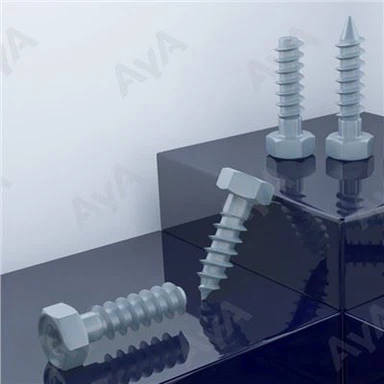
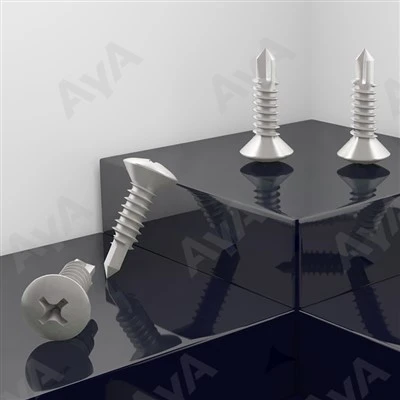
The fasteners securing the battery tray must resist moisture ingress. Using Hex Head Self-Drilling Screws with integrated EPDM washers can provide a secondary leak-proof barrier while ensuring high-speed assembly.


Chassis and Suspension
The extra weight of EV batteries puts higher stress on the chassis. High-tensile structural bolts (Grade 10.9 or 12.9) are required, but they must be treated with anti-corrosive coatings that do not compromise their mechanical strength.
External Components (Mirrors & Lighting)
As discussed in our previous application guides, rear-view mirrors and tail lights are the first to show "red rust" in tropical climates. Choosing fasteners with superior oxidation resistance ensures the vehicle's aesthetic and functional longevity.

Why Compliance Matters: IATF 16949
For procurement managers in Brazil and Thailand, the IATF 16949 certification is the ultimate trust signal. It guarantees that every fastener-from a simple screw to a complex custom bolt-undergoes rigorous quality inspection to meet the "Zero Defect" standard required by global EV manufacturers.
Technical Specifications for Tropical EV Applications
For EVs operating in Brazil and Thailand, the following technical thresholds are recommended to ensure long-term reliability.
1. Surface Treatment & Corrosion Resistance (NSS Testing)
In tropical coastal regions, the Neutral Salt Spray (NSS) test is the industry benchmark for durability.
| Coating Type | Salt Spray Resistance (Hours) |
| Zinc Nickel Plating | 1000+hrs/1500hrs max |
| Dacromet/Silver Ruspert | 300/500/1000/1500hrs |
| Teflon | 4000/9000hrs |
| Magni | 300/500hrs |
2. Performance Standards & Compliance
Adherence to international standards ensures that fasteners can be seamlessly integrated into global EV platforms (e.g., Tesla, BYD, or Great Wall Motors standards).
- Quality Management: IATF 16949, IS09001 (Automotive Quality Management System).
- Environmental Compliance: RoHS/IS014001 (Crucial for the "Green" image of EVs).
- Cleanliness Standards: ISO 16232 (Essential for sensitive electronics and battery packs).
Conclusion
In the high temperatures of Brazil and Thailand, thermal expansion can alter the preload of a fastener. AYA Fasteners provides technical data on friction coefficients (μ) for different coatings to ensure that the clamping force remains stable between -40℃ and +120℃.
Why AYA Fasteners?
Our manufacturing process focuses on Zero-Defect (0 PPM) production. By utilizing automated optical sorting machines, we ensure that every fastener delivered to your facility in Bangkok or São Paulo meets the exact technical parameters required for modern EV safety.