Flat Washer Vs. Spring Washers, How To Choose?
May 16, 2023
Flat washers and spring washers are well-known and often used washers. While all washers are designed to distribute the load of a fastener, there are available in several types, including plain and spring.
In the process of bolt use, washers play an indispensable role respectively, so how to choose flat washers and spring washers correctly? Let’s talk today!
What Is a Flat Washer?

Flat washers, also known as plain washers or flat disks, are circular-shaped thin metal, plastic, or rubber discs with a hole in the center. They are commonly used in various applications to distribute the load of a fastener (such as a bolt or screw) and provide a smooth and even bearing surface.
The primary function of flat washers is to prevent damage to the surface being fastened, such as wood, metal, or plastic. Placing a flat washer between the fastener head or nut and the surface helps distribute the load and reduces the risk of the fastener digging into or damaging the material. Additionally, flat washers can also help prevent loosening, reduce friction, and isolate vibration between connected components.
Flat washers come in different materials, such as steel, stainless steel, brass, nylon, or rubber, depending on the specific application requirements. They are available in various sizes and thicknesses to accommodate different bolt or screw diameters.
Flat washers are versatile and widely used in construction, automotive, manufacturing, and many other industries where securing and fastening components is necessary.
What Is a Spring Washer?
Spring washers are specially designed washers that provide spring-like action when compressed. They are typically made of hardened steel or stainless steel and have a conical or curved shape.
The unique design of spring washers allows them to act as a spring element in a fastening system. When a load is applied, the spring washer compresses and exerts a force in the opposite direction, creating a tension that helps maintain the tightness of the connection. This spring action helps compensate for loosening caused by vibration, thermal expansion/contraction, or settling of the connected components.
Spring washers are commonly used in applications where maintaining a consistent preload or tension is crucial, such as in bolts, screws, or nuts. They are particularly effective in environments with high vibration, shock, or thermal cycling, as they can provide a continuous force to counteract the potential loosening of the fasteners.
Spring washers provide added security and help maintain the integrity of fastened connections in demanding environments where vibration, shock, or thermal changes may cause loosening.
Different Types Of Spring Washers:
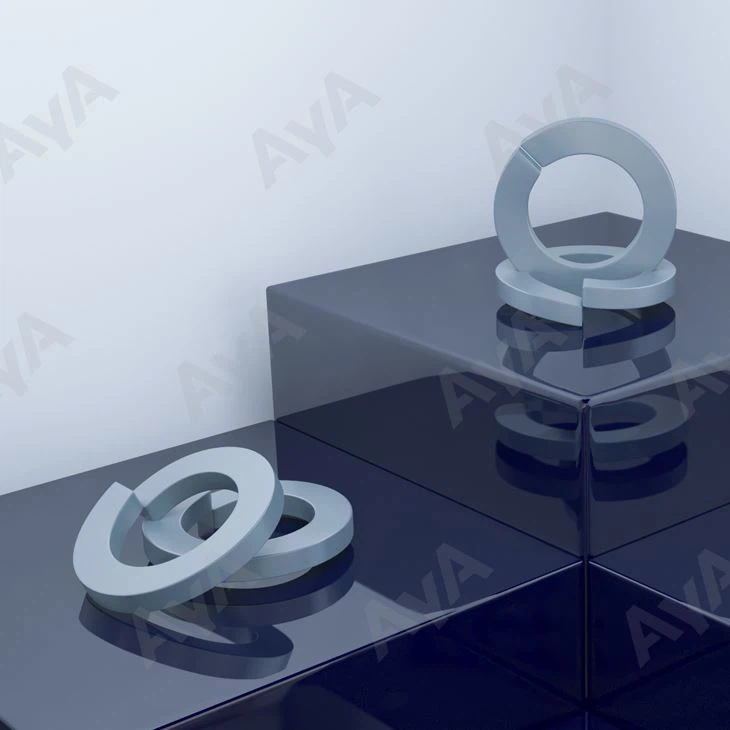
Spring Washer
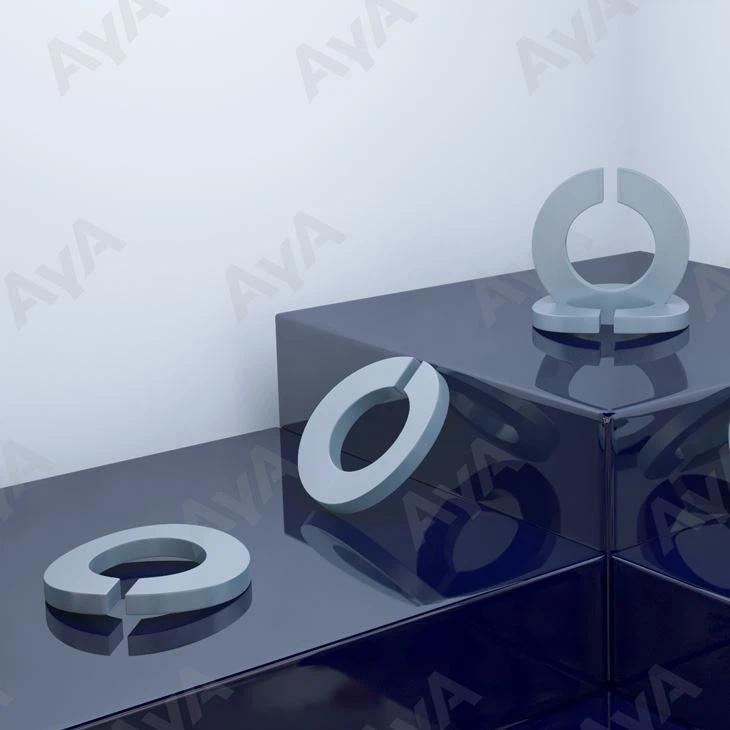
Curved Spring Lock Washers

Wave Spring Washer

Disk Spring Washer
What Are The Difference Between Plain Washers and Spring Washers?
The main difference between plain washers and spring washers lies in their design and functionality. Here are the key distinctions:
● Design: Plain washers, also known as flat washers, have a flat, circular shape with a hole in the center. They are usually thin and uniform in thickness.
Spring washers, on the other hand, have a unique design that allows them to act as a spring when compressed. They are often conical, curved, or wavy in shape.
● Function: Plain washers are primarily used to distribute a load of a fastener evenly and provide a smooth surface between the fastener and the material being fastened. They help prevent damage to the surface, reduce friction, and increase stability.
Spring washers, as their name suggests, provide spring-like action. They are designed to exert a constant force when compressed. The spring action helps maintain tension and prevent the loosening of the fastener due to vibrations, thermal expansion/contraction, or settling of components.
●Application: Plain washers are commonly used in various applications where a smooth, uniform load distribution is required. They are widely used in construction, automotive, and manufacturing industries.
Spring washers find application in situations where maintaining tension or preventing loosening is critical. They are commonly used in fasteners subject to vibration, such as in machinery, engines, and high-stress assemblies.
● Material: Both plain washers and spring washers can be made from various materials, including steel, stainless steel, brass, nylon, or rubber. The choice of material depends on factors such as the application requirements, environmental conditions, and the level of load or stress the washer will experience.
In summary, plain washers provide load distribution and stability, while spring washers offer spring-like action to maintain tension and prevent loosening. The choice between the two depends on the specific application, fastener requirements, and the need for additional spring force or vibration resistance.
Looking for Fasteners?
Click below to browse AYA FASTENERS' extensive Fastener catalog, including high-quality screws, bolts, washers, and nuts products.


Tel: +86-311-85870676

WhatsApp/WeChat: +8615823215841

Email: sales@ayafasteners.com

Address: Hebei Province, China