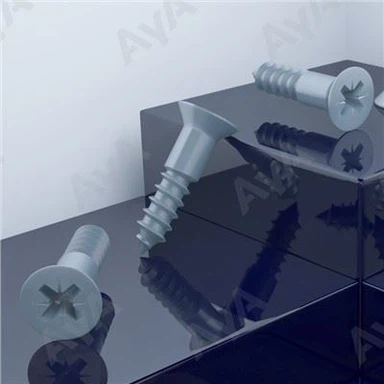
Tolerancing Of Screw Threads
May 19, 2023
The manufacturing of screws is a process with room for error. While in an ideal world, every single screw would exactly match the theoretical profile for screw threads created, the reality is that manufacturers are unable to produce such exact copies of the screws. As a result, the need for a measure that discloses how much deviation from the profile is allowed is necessary.
In general, this is called thread tolerance. Thread tolerance shows the levels at which a thread can move away from the basic thread profile and still manage to achieve secure connections. Understanding this concept can be key, as it helps one better understand what makes each screw unique, as well as determining which screw, they should ideally be targeting.
What is tolerancing of screw threads?
Thread tolerancing essentially refers to the amount of deviation allowed during the manufacturing process for screws. This slight deviation will mean that while not all screws are completely identical, they will all be able to be a complete fit when you need to use them.
Why is screw thread tolerancing necessary?
There are two distinct reasons that lead to screw thread tolerancing and which can be fundamental in understanding why this is necessary.
1. Cost-effective production
Naturally, one of the biggest driving forces behind thread tolerancing is the fact that companies are not able to slow down production in favor of creating screw threads that are exact. As this is an extremely costly procedure, having a way of bringing down the coast by introducing tolerancing can be key. While mass manufacturing is great for reducing the cost of a product that has reached the hands of a consumer, it could potentially make the product more ineffective.
2. Ensures a standard and fit
The reason why tolerancing and especially well-regulated tolerancing is so necessary is that in reality, it helps ensure that regardless of the deviation that took place. As a result, you can have the certainty that the material you have picked for your project is going to help you build an impressive project.
When do you need to use screw threads with high thread tolerance?
Typically, when it comes to mass-manufactured screws you will most likely see that the thread tolerance on the screws is going to be higher. These tend to be great for non-specialized usage and will most likely be the type of screws that you use for at-home projects. This is in part because their screws will have tolerance data that shows that they have been acceptably constructed on a massive scale without being too perfect.
When do you need to use screw threads with low thread tolerance?
The higher the thread tolerance the more imperfect the screws are in many ways. Usually, while high-thread tolerance screws will work for most at-home projects, low-thread-tolerance screws will need to be the ones that people in specialized industries use. These types of more precise screws are usually created for heavy industries or other highly demanding industries like the aerospace or aviation industry. As these industries will usually have custom-made screws there is no need for mass manufacturing, which means that the cost of each screw can be higher so long as it is ensured that the end result has a low thread count that would allow the manufacturing quality to be high.
What is an allowance?
When it comes to nuts and screws there is usually a difference between the basic theoretical profile of these fasteners and the actually manufactured profile of the good produced. The difference between what the theoretical thread should be and the actual thread is known as the allowance in inch-based threads. This is usually mitigated by the threads being coated, which ultimately helps reduce the gap through the coating thickness. Following this coating, the actual thread count needs to not transgress the basic profile.
How are the designations for a metric thread denoted?
A full designation for a metric thread will normally include information about the thread tolerance class. The International Organization for Standardization (ISO) has set specific limits for the metric screw thread. According to ISO 965, the screw threads will typically have two tolerances. The first is the maximum outside diameter, or the major diameter of the thread, while the second is the pitch diameter, which is normally measured from the midpoint. For example, if the screw you are checking out states M11 x 1 – 5g6g, then the threads have a nominal diameter of 11mm and a pitch of 1mm. From there the first 5g will refer to the tolerance class of the pitch diameter, while the second 6g will refer to the tolerance class of the major diameter.
Are Class of Threads and H limits relevant in screw tolerancing?
There are three established classes of threads to take into account, these thread classes help essentially define whether or not you should be using a high or low-tolerance thread nut or screw. For these classes to make better sense you will need to remember that “A” is used for screws, while “B” is used for Nuts or other types of internal threads.
Class 1B Thread
Class 1B thread, means that a 1A screw can easily be used for a good fit in a 1B thread. For the most part, these don’t have the lowest tolerance levels which is why they are not frequently used in any type of metalworking. Because of the easy assembly of these screws and nuts, it is often referred to as the loose commercial fit.
Class 2B Thread
Similarly, this class is for using a 2A screw in a 2B hole. The 2B thread has wide enough tolerance allowances that it can actually be used in a number of projects. It also tends to work well because it can also accommodate plating, finishing, and even some coating. This is sometimes referred to as a medium fit.
Class 3B Thread
Finally, the 3B Thread is used in all cases where the tolerance limits are very small or close. These are therefore normally used for more specialized purposes. This is often referred to as a tight fit.
What are tolerance positions?
Tolerance positions are usually denoted by a letter. The standard is that upper case letters are used for nut threads, while lower case letters are used for bolt threads. The tolerance position refers to the distance of the tolerance from the thread profiles' basic size.
What are the tolerance positions for nuts and bolts?
Nut threads have two distinct tolerance positions. H is the zero fundamental deviation, whereas G is a positive fundamental deviation.
Bolts on the other hand have four tolerance positions. Similarly, h has a zero fundamental deviation, while the remaining three tolerance positions have negative fundamental deviations.
What is a positive fundamental deviation and what is a negative fundamental deviation?
A positive fundamental deviation shows that the size of the thread element is going to be larger than the basic size. On the other hand, the negative fundamental deviation will mean that the thread element sizes are going to be smaller than the basic size.
What is the standard thread limit?
The standard thread limit is a direct reference to the notation system being currently used. The limits are normally defined by an H when dealing with inches while it refers to D when you are working with metric.
What is the standard ISO thread tolerance?
For everyday normal use, ISO 956 recommends the usage of 6H and 6g.
Conclusion:
When it comes to any project collecting the right material can be key. However, as most people are not going to be finding custom bolts, nuts, and screws for their home projects, chances are you will need to buy mass-manufactured bolts, nuts, and screws. These will usually have a higher tolerancing thread number as they are not specialized in their usage or production.
Still, just because all of the screws you are using are mass-manufactured, it does not necessarily mean that you need to fall victim to bad-quality fasteners. AYA fasteners are a guaranteed solution in the space as they are able to both provide you with the nuts and bolts you need and could also assist you in designing a new screw that has the exact capabilities, including products with lower tolerancing levels. This can be particularly important for those projects where precision is key and necessary for people’s projects or industries.
Generally, both cost and intention are going to help define which crews are best going to serve you. While excessive tolerancing might be a bad sign, in most cases, you should be able to use screws because of the tolerancing regulations which ensure their functionality and safety.
Looking for Fasteners?
Click below to browse AYA FASTENERS' extensive Fastener catalog, including high-quality screws, bolts, washers, and nuts products.


Tel: +86-311-85870676

WhatsApp/WeChat: +8615823215841

Email: sales@ayafasteners.com

Address: Hebei Province, China