


Corrosion Between Dissimilar Metals: How Fastener Selection Affects Long-Term Reliability
Jun 26, 2026

Corrosion between dissimilar metals is one of the most common causes of premature fastener failure in industrial equipment, transportation systems, and outdoor structures. Even when individual materials perform well, combining incompatible metals can significantly shorten the service life of an assembly.
Material selection, surface treatment, and joint design all influence long-term reliability. Understanding these factors early helps reduce maintenance costs and avoid unexpected failures.
1. Why Does Galvanic Corrosion Occur Between Different Metals?
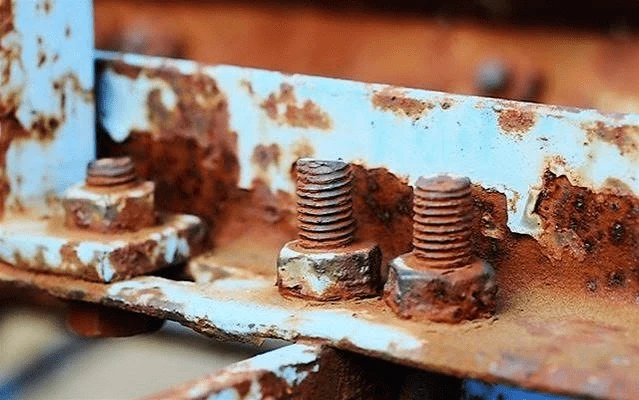
Galvanic corrosion occurs when two dissimilar metals come into electrical contact in the presence of an electrolyte, such as rainwater, humidity, or salt spray. The more active metal gradually corrodes while the more noble metal remains protected.
Not Every Metal Combination Performs the Same
The risk depends on several engineering factors rather than the fastener material alone.
✓ The greater the electrochemical difference between two metals, the higher the corrosion risk under the same environmental conditions.
✓ Moisture, coastal environments, and industrial pollutants can significantly accelerate the corrosion process.
✓ Large differences in exposed surface area may also increase the corrosion rate of the less noble material.
Ignoring these factors during design can reduce joint reliability long before the expected service life.
2. Which Material Combinations Create the Highest Corrosion Risks?
Some material combinations are widely used because they reduce weight or improve structural performance. However, they also require careful engineering evaluation.
Common Material Pairings That Require Attention
Examples include:
• Stainless steel fasteners installed in aluminum structures
• Carbon steel components connected to aluminum frames
• Copper parts assembled with galvanized steel
These combinations do not automatically fail, but they require appropriate design measures to minimize corrosion.
Environmental Conditions Matter
A material combination that performs well indoors may behave very differently in marine, chemical, or high-humidity environments.
Selecting materials should always consider the actual service environment-not only mechanical strength.
3. How Does Galvanic Corrosion Affect Fastener Performance?
Corrosion is rarely just a cosmetic issue. Over time, it can reduce both the strength and reliability of a bolted joint.
The Impact Extends Beyond Surface Damage
As corrosion progresses, engineers may encounter:
✓ Loss of clamp load, reducing joint stability under dynamic loading.
✓ Thread seizure and difficult disassembly, increasing maintenance time and repair costs.
✓ Premature corrosion around the joint, leading to unexpected inspections or component replacement.
These issues can result in production downtime, warranty claims, and higher lifecycle costs-especially in high-value industrial equipment.
4. How Can Engineers Reduce Corrosion Risks During the Design Stage?
The most effective corrosion protection strategy begins during product development rather than after production.
Design Decisions Make the Biggest Difference
Several engineering practices can significantly reduce long-term risks.
1. Select compatible materials
Choose material combinations that minimize electrochemical differences whenever possible.
2. Evaluate protective surface coatings
Coatings should provide corrosion resistance while maintaining proper dimensional fit and assembly performance.
3. Review the complete joint design
Drainage paths, sealing methods, insulation materials, and fastener positioning all influence long-term corrosion behavior.
Early DFM reviews help identify these risks before tooling and mass production begin, reducing costly engineering changes later.
5. Building Reliable Fastener Solutions for Multi-Material Assemblies
As lightweight structures and mixed-material assemblies become more common, fastener selection plays an increasingly important role in long-term product performance.
Successful projects combine material compatibility, corrosion protection, manufacturing feasibility, and assembly reliability rather than focusing on a single factor.
Suppliers that support engineering reviews early in the development process can help optimize fastener materials, coatings, and production methods before components enter mass production.
A well-designed fastening solution not only prevents corrosion-it also improves product reliability, reduces maintenance costs, and supports long-term supply stability.
Looking for Custom Fasteners Designed for Challenging Environments?
Whether your project involves aluminum structures, stainless steel assemblies, or mixed-material applications, selecting the right fastening solution starts with engineering evaluation.
Share your drawings or application requirements with our engineering team to discuss custom fastener solutions designed for corrosion resistance, reliable assembly, and long-term performance.


