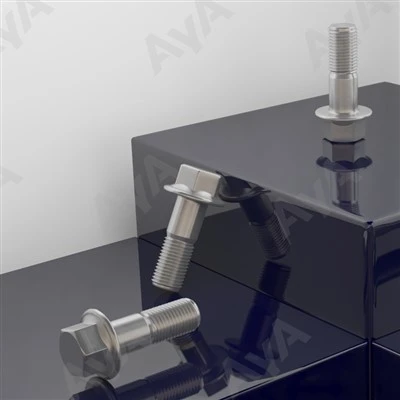
AYA FASTENERS Guide | Selection Requirements For Surface Treatment Of Metal Fasteners For Automotive
May 23, 2024
The surface treatment of metal fasteners for automobiles is varied, and the treatment methods of fasteners with different functions in different positions are also different. There are oiling, phosphating, electro-zinc, zinc-nickel alloy, copper-plating, chrome-plating, zinc-aluminum coating, oxidation, etc.

Oiling
Oiling refers to applying a layer of anti-rust oil on the surface of the fastener base. Oiled fasteners require that under normal storage conditions, no rust will occur within half a year. Its cost is the lowest, but the rust prevention effect is the worst, and it is generally used on fasteners that are electrophoresed with the body or other parts.
Phosphating
Phosphating is the chemical and electrochemical reaction of fasteners with phosphoric acid or phosphate to form a water-insoluble phosphate chemical conversion film. Phosphating is cheaper than galvanizing, and its corrosion resistance is worse than galvanizing. Commonly used in automobile manufacturing are zinc-based phosphating and manganese-based phosphating. Zinc-based phosphating has better lubricating properties than manganese-based phosphating, and manganese-based phosphating has better corrosion resistance and wear resistance. Zinc-based phosphating has relatively low hardness, high porosity, and good adhesion to electrophoretic paint, and there is a phenomenon of powder falling, so it cannot be used in environments where cleanliness is required in the casing of engines and transmissions. Generally used on fasteners that are electrophoresed with the body or other parts. Manganese-based phosphating has high hardness, close grain arrangement, and stable friction factor. It is generally used in the casing of engines and transmissions.
electro galvanizing
 Electro galvanizing is the most commonly used coating for commercial fasteners. It is cheaper and looks good, and it comes in black, white, color, and army green. It is a process of depositing metal zinc on the surface of fasteners by electrolytic process. In order to reduce the chemical activity of zinc and improve the rust resistance and appearance of fasteners, generally galvanized fasteners need to be passivated by chromate, a chromate conversion film is formed on the surface of the fastener, a process called galvanizing passivation. Different chromate solution components can get fasteners of different colors. Electro-galvanized fasteners are generally used in automotive cabs where the rust resistance is low.
Zinc-nickel alloy
The production process of zinc-nickel alloy surface treatment is similar to that of electro-galvanizing. A zinc-nickel alloy coating is formed on the surface of the fastener. The metal nickel content in the zinc-nickel alloy coating is 12%~15%, and its cost and corrosion resistance are higher than those of electro-galvanizing, generally used in environments with high rust resistance and appearance requirements.
copper plating
Copper plating is divided into electroless copper plating and copper electroplating. Electroless copper plating is the reduction and precipitation of copper ions on the surface of catalytically active substances such as palladium through the action of reducing agents such as formaldehyde. The advantages of electroless copper plating over electroplating copper mainly include a wide range of substrates, uniform coating thickness, simple process equipment, and good coating performance. Electroplating copper is the intermediate layer of other metals that are not easy to be plated before electroplating. Almost all conventional electroplating layers can use copper as an intermediate transition layer. Copper plating is often used for welding fasteners because of its good electrical conductivity.
chrome plated
The chrome-plated layer is not easy to change color and tarnish in the air and has high hardness and good wear resistance. This method is commonly used for wheel bolts and wheel nuts.
zinc aluminum
The zinc-aluminum coating is a thin film composed of overlapping multi-layer metal flakes and special inorganic adhesives formed by immersing the fasteners in zinc-aluminum coating solution after cleaning and shot blasting, and then baking at high temperature. The zinc-aluminum coating can be manufactured in various colors as required, and silver-gray zinc-aluminum coating and black zinc-aluminum coating are recommended. The zinc-aluminum coating has good corrosion resistance and no risk of hydrogen embrittlement. It cannot be used in environments with electrical conductivity and cleanliness requirements. It is not recommended for fasteners with thread specifications smaller than m8. Generally used in areas with high rust resistance such as engine room and chassis.
oxidation

Oxidation treatment is to immerse the fastener in a strong oxidant to form a dense oxide film on the surface of the fastener. Often referred to as bluing or blackening, its corrosion resistance is lower than that of phosphating and electro-galvanizing. It is less used in automobiles and is not recommended.
When you decide to buy fasteners you must choose the right product according to your actual needs to avoid unnecessary losses due to the wrong choice. If you want more information, please contact AYA for the details.
AYA is one of the most reputable leading fasteners manufacturers and suppliers in China, we focus on assembly and fastening materials, supplying global customers with high-quality screws, bolts, washers, and nuts products Since 2008.
Looking for Fasteners?
Click below to browse AYA FASTENERS' extensive Fastener catalog, including high-quality screws, bolts, nuts, and washers products.

Tel: +86-311-85870676

WhatsApp/WeChat: +8615532219049

Email: sales@ayafasteners.com

Address: Hebei Province, China
上方是模板内容,下方是编辑器原内容,编辑好请删除原内容.