How Much Do You Know About Bolts Before Buying The Good Quality Bolt Product?
Aug 16, 2024
When purchasing bolts, understanding their quality and specifications is crucial to ensuring the performance and safety of the final product. Bolts, as fasteners, are widely used in construction, automotive, machinery, and various industrial fields. This article will help you understand the key factors to consider before buying high-quality bolt products.
1.Material of Bolts
The material of a bolt directly affects its durability and suitability for different environments.
Common materials include:
Stainless steel is known for giving perform resistance to heat and corrosion while also having high weldability. There are various different performance grades for stainless steel (45,50,60,70, and 80) with most of them consisting of austenite. Different types of stainless steel also have slightly different qualities.
A1, A2, A4 martensite, and 13% C are known for their high strength and wear resistance but their corrosion resistance is low. C1, C2, and C4 are considered to be ferritic stainless steel, while 18 percent CR has a far higher level of corrosion resistance.
Carbon steel is divided into low-carbon steel, medium-carbon steel, and high-carbon steel. There is also alloy steel by carbon content but that type of carbon steel is not normally available in the market.
Strength Grades of Bolts
The strength grade of a bolt determines the maximum load it can withstand.
Common strength grades include:
Grade 8.8: Suitable for general engineering needs, offering good strength and toughness.
Grade 10.9: Used for high-strength applications, such as in automotive and heavy machinery, capable of withstanding greater forces.
Grade 12.9: Provides the highest strength, suitable for fastening requirements under extreme conditions.
Thread Specifications
Thread specifications determine the fit accuracy and connection stability of bolts.
Common thread types include:
Metric Threads: Used for international standard applications, commonly found in most machinery and construction fields.
Imperial Threads: Used in some countries and specific applications, such as in aerospace and certain engineering projects.
Thread Specifications
The type of bolt head affects its installation method and the tools used.
Common types include:
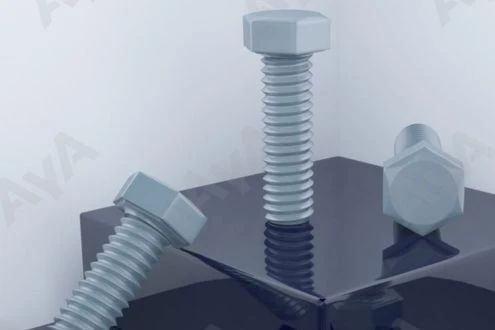
The most commonly used type, suitable for various standard tools.
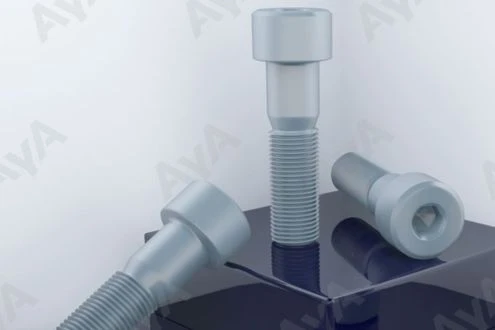
Ideal for confined spaces or applications requiring higher torque.
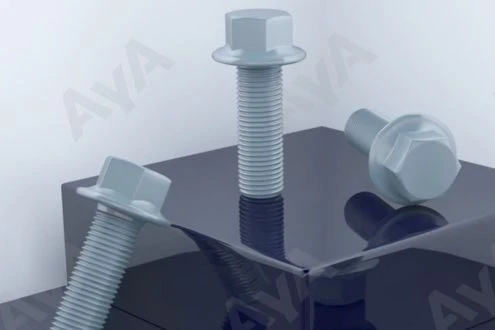
This flange acts like a built-in washer, distributing the load across a wider area and providing a more secure and stable connection
Surface Treatment
The surface treatment of bolts can enhance their corrosion resistance and durability. Common treatments include:
(1) Electro galvanizing
Electro galvanizing is a low-cost surface treatment that can leave you with fasteners that have a beautiful appearance. However, while it is a relatively cost-effective method, its anti-corrosion performance is not as good as one might hope, and it is generally considered one of the methods with the lowest anti-corrosion performance.
Galvanizing is also likely to lead to hydrogen embrittlement which is why it is not a method used with bolts that have a grade higher than 10.9. While there is a process for removing hydrogen that can be used after galvanizing, the passivation film is going to be damaged by this process which requires a temperature of more than 60 degrees. As a result, unless it is required by the customer most manufacturers are not going to proceed with hydrogen removal unless necessary.
(2) Surface phosphating
This process is even cheaper than galvanizing but the corrosion resistance it provides the bolt is even lower. Fasteners need to be coated with oil once this process is completed, as corrosion resistance is actually connected to the oil's performance.
Industrial screw fasteners are often taken through the phosphating and oiling process as the performance of this method is fairly consistent and the toque and pre-tightening forces can have a good performance overall.
(3)Oxidation
Oxidation, also known as blackening and bluing, is a process that is used for the rapid oxidization of steel and iron products. This creates a dense oxide film protective layer. Blackening has many benefits including that it can be safe to perform without electricity. It is also a low-cost and fast method with very simple materials.
This is the cheapest surface treatment available for industrial fasteners which is why it is often used by manufacturers.
However, blackening does not have any antirust abilities, which means that even after the material is oiled it could end up being rusted. Blackening does not improve the pre-tightening force or torque of a fastener either.
(4)Silver and nickel plating
Silver coating is extremely effective in preventing corrosion and it can also act as a solid lubricant for fasteners. However, the high cost of the silver plating means that it is usually nuts and smaller bolts that are coated while larger bolts are not normally coated. Silver plating also adds to the high-temperature resistance of the bolt and can help prevent oxidization. Nickel plating is also effective when high corrosion resistance and conductivity are necessary, including in the vehicle battery terminal.
Suppliers and Certifications
Choosing a reputable supplier and checking product certifications can ensure that the bolts meet quality standards. Certifications such as ISO and DIN provide additional quality assurance.AYA Fasteners have achieved certifcations oflS09001: 2015, 1S014001:2015,1S045001: 2018,etc.

When purchasing bolts, understanding key factors such as material, strength grade, thread specifications, head type, and surface treatment, along with selecting a reputable supplier, is crucial for ensuring high-quality products that meet performance and safety standards. As a global leader in fastening solutions, AYA Fasteners offers premium and customized fasteners. Choosing AYA means choosing excellence.