


Bolt vs Nut: What's the Difference? Types, Uses & Selection Guide
Oct 16, 2025

"What is the difference between a bolt and a nut?"
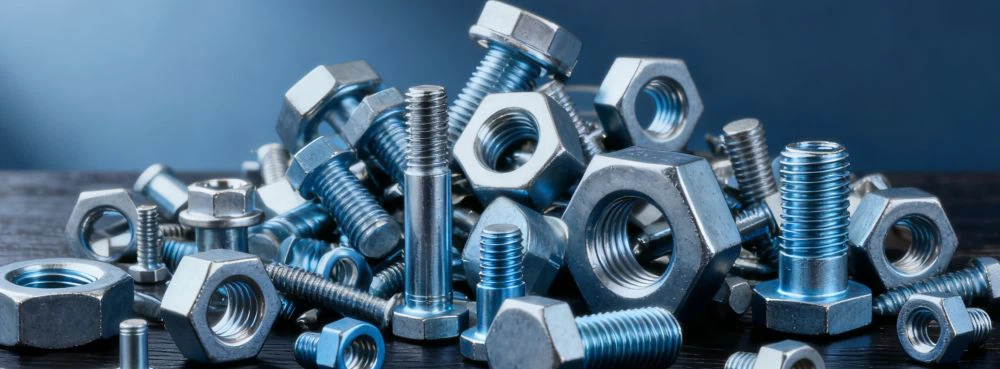
Bolts and nuts work together to create a secure mechanical connection, but they perform different functions. A bolt typically has external threads, while a nut has internal threads that engage with the bolt.
Choosing the right combination depends on factors such as load, thread compatibility, material, coating and installation conditions. This guide explains the key differences between bolts and nuts, common types, applications and how to select the right fastening solution.
WHAT IS A BOLT? DEFINITION, TYPES, MATERIALS & USES
Bolt Components and Design Explained
A bolt is a type of threaded fastener consisting of two main parts, a head and a cylindrical body with external threads. The head, often hexagonal in shape, allows for easy tightening with a wrench or socket. Bolts are typically made from carbon steel, stainless steel, or alloy steel, depending on their application and environmental exposure.
The thread design is critical: fully threaded bolts offer uniform strength along their entire length, while partially threaded bolts provide higher shear strength in the unthreaded section, ideal for load-bearing joints.
Popular Bolt Types and Their Industrial Applications

Carriage Bolts: With a round head and square neck, these are frequently used in woodworking and furniture assembly.

Anchor Bolts: Designed to secure structural components to concrete foundations-essential in building and infrastructure projects.

Machine Bolts: Used in heavy-duty machinery and equipment, providing excellent tensile strength for precision assembly.

WHAT IS A NUT? FUNCTION, DESIGN & KEY TYPES
How Nuts Complement Bolts in Fastening Systems
A nut is a small, internally threaded fastener that pairs with a bolt to hold two or more components together. Unlike bolts, nuts cannot be used independently-they rely on a bolt's external threads to form a secure connection. The combination works through tensile and compressive forces, ensuring a tight, vibration-resistant fit.
Common Nut Types and Their Industrial Uses
Hex Nuts: The standard six-sided nut, used across virtually every industry for its balance of torque and accessibility.

Lock Nuts: Designed to resist loosening from vibration, essential in automotive, aerospace, and machinery applications.

Cap Nuts: Feature a dome-shaped top that prevents corrosion by covering exposed threads-common in outdoor and decorative assemblies.

Square Nuts: Provide a larger bearing surface for better grip and are often found in construction and heavy equipment assembly.

BOLT VS NUT: CORE TECHNICAL DIFFERENCES
Structural & Functional Differences
While bolts and nuts are used together, they differ significantly in design and purpose:
- Bolts have external threads; nuts have internal threads.
- Bolts are load-bearing fasteners that provide structural tension; nuts are locking devices that secure bolts in place.
- A bolt can sometimes be used independently (e.g., in threaded holes), whereas a nut cannot function without a bolt.
Mechanical Stress, Material Composition, and Durability
Bolts primarily experience tensile stress, while nuts face compressive stress. Bolts are often made from high-grade steel or nickel-chrome alloys for superior strength. Nuts may use similar or slightly softer materials to allow proper thread engagement. Surface coatings like zinc plating or hot-dip galvanizing enhance corrosion resistance, especially in humid or marine environments.
APPLICATIONS IN THAILAND AND BRAZIL'S KEY INDUSTRIES
Thailand: Construction and Automotive Industries
In Thailand, bolts and nuts are fundamental components in both construction and automotive manufacturing sectors.
- Construction Industry: High-tensile anchor bolts and hex bolts are widely used in high-rise projects and infrastructure development, such as bridges, factories, and highways. Given Thailand's humid climate, galvanized fasteners are preferred to prevent rust and extend service life.
- Automotive Industry: Thailand's automotive sector, one of Asia's largest, relies heavily on precision-engineered bolts and lock nuts for vehicle assembly, suspension systems, and engine mounting, where vibration resistance and consistency are key.
Brazil: Oil & Gas and Furniture Manufacturing
In Brazil, two key industries stand out for their reliance on fasteners: oil & gas and furniture manufacturing.
- Oil & Gas Industry: Offshore drilling and refinery equipment demand corrosion-resistant stainless-steel bolts and nuts that can endure saltwater exposure and high pressure. Bolts with ISO-certified tensile properties ensure the safety and reliability of large-scale operations.
- Furniture Manufacturing: Brazil's expanding furniture industry favors carriage bolts and cap nuts for aesthetic and structural reasons. These fasteners provide smooth finishes and durable joints, supporting both modern and traditional wooden designs.
GLOBAL STANDARDS AND PRODUCT QUALITY ASSURANCE
AYA Fasteners' products are ISO-certified, ensuring each bolt and nut meets international benchmarks for strength, consistency, and safety. ISO compliance guarantees compatibility across machinery, automotive, and construction systems worldwide, making our fasteners a trusted choice for international B2B clients.

ISO 9001: 2015

ISO 14001: 2015

ISO 45001: 2018

IATF 16949:2016
CHOOSING THE RIGHT FASTENER FOR YOUR B2B PROJECT
Factors to Consider: Material, Coating, and Environment
When choosing between different fasteners, decision-makers should consider:
- Material composition: Stainless steel for corrosion resistance, carbon steel for strength, and alloy steel for high-stress environments. Click here to view AYA Fasteners' stainless steel bolts product list.
- Coating type: Zinc plating or hot-dip galvanizing extends service life in outdoor or coastal settings.
- Application environment: For example, construction projects in tropical Thailand require moisture-resistant coatings, while oil refineries in Brazil need high-heat-tolerant materials.
Common Mistakes in Fastener Selection and How to Avoid Them
- Ignoring thread compatibility: Mixing metric and imperial threads leads to a poor fit and potential failure.
- Underestimating load requirements: Selecting fasteners with insufficient tensile strength can cause loosening or structural damage.
- Neglecting environmental factors: Corrosion from humidity, salt, or chemicals can significantly shorten the service life if not accounted for in the material choice.
PARTNER WITH AYA FASTENERS FOR RELIABLE, CERTIFIED PRODUCTS
AYA Fasteners provides a comprehensive range of ISO-certified bolts and nuts designed to meet industrial needs across multiple sectors. Our fasteners are manufactured under strict quality control, ensuring durability, precision, and global compatibility.
Looking for a trusted supplier of industrial fasteners? Contact AYA Fasteners right now for bulk order quotations, technical support, or custom manufacturing inquiries.
FAQs
1. What's the most commonly used bolt–nut combination in heavy construction?
Hex bolts paired with hex nuts are the industry standard due to their strength, ease of tightening, and versatility.
2. Can I order custom-sized bolts and nuts?
Yes! For industrial projects requiring specific materials or non-standard threading, custom manufacturing is the best choice.
3. Can the same type of bolt be used in both Thailand and Brazil?
Yes, ISO-certified bolts are compatible globally. However, buyers should select corrosion-resistant coatings suited for tropical and coastal climates.
CONCLUSION: BUILDING STRONGER CONNECTIONS LITERALLY AND PROFESSIONALLY
Bolts and nuts may appear simple, but their impact on industrial safety and reliability is immense. From high-rise construction in Bangkok to offshore platforms in Rio de Janeiro, the right fasteners ensure stability, safety, and long-term performance.
For B2B buyers seeking durable, ISO-certified, and globally compliant fasteners, AYA Fasteners is the partner you can trust to strengthen not only your assemblies but also your business connections worldwide.
Not sure whether a bolt or nut fits your application? Our engineers can help evaluate your load, material, and assembly conditions.


