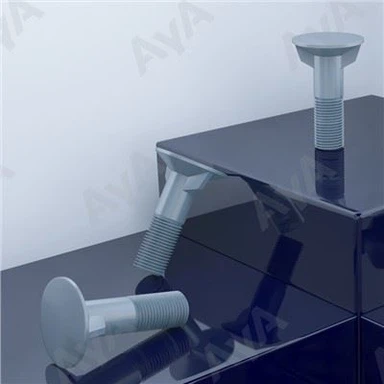
Standard Bolts Vs. Vibration: Is Your Truck Chassis Safe?
Apr 28, 2026
Heavy-duty trucks are designed to operate under demanding conditions, including long-distance transportation, uneven road surfaces, and continuous dynamic loading. While major components such as engines and suspensions receive significant engineering attention, fastening systems are often underestimated.
In reality, bolt failure in truck chassis systems is a critical issue that directly impacts safety, maintenance cost, and operational reliability. Under high-frequency vibration, standard fasteners may gradually lose preload, deform, or fail.
Understanding why these failures occur and how to prevent them is essential for OEM manufacturers, fleet operators, and engineering teams seeking long-term performance and reliability.

The Hidden Risks and Failure Modes in Truck Chassis Fastening
Fasteners in truck chassis systems are exposed to complex mechanical conditions. Unlike static structures, truck components experience continuous dynamic stress during operation.
Common failure risks often develop gradually and may not be immediately visible. However, over time, they can lead to serious structural issues.
Typical failure modes include:
1. Preload loss and loosening
Repeated vibration reduces clamping force, allowing joints to shift or separate.
2. Fatigue failure
Cyclic loading causes micro-cracks that grow over time, eventually leading to fracture.
3. Thread wear and deformation
Constant movement can damage thread surfaces, affecting engagement and load transfer.
4. Corrosion-assisted failure
Exposure to moisture and road conditions accelerates material degradation.
These failure modes often occur simultaneously, making it difficult to diagnose the root cause without detailed engineering analysis.
How High-Frequency Vibration Causes Bolt Failure
Vibration is one of the most critical factors affecting fastener performance in heavy-duty trucks.
During operation, trucks experience continuous high-frequency vibration due to engine motion, road impacts, and load shifts. This vibration affects fasteners in several ways.
First, it reduces friction between mating surfaces. As friction decreases, the bolt may begin to rotate slightly, leading to gradual loosening.
Second, vibration causes fluctuating stress on the fastener. This repeated stress accelerates fatigue damage, especially in areas with stress concentration, such as thread roots.
Third, dynamic loading alters preload distribution. Even if the initial tightening is correct, vibration can lead to uneven load sharing across the joint.
In practical terms, this means that a bolt designed only for static load conditions is unlikely to perform reliably in a high-vibration environment.
Effective fastening in such conditions requires both mechanical strength and vibration resistance.
Why Standard Bolts Fall Short in Heavy-Duty Truck Applications
Standard bolts are typically manufactured for general industrial use. While they meet basic strength requirements, they are not optimized for the specific demands of truck chassis systems.
Several limitations become evident in real applications:
1. Lack of vibration-resistant design
Standard threads and surfaces are not optimized to maintain preload under dynamic conditions.
2. Limited material optimization
Off-the-shelf bolts may not provide the ideal balance between strength and fatigue resistance.
3. Inadequate tolerance control
Variations in dimensions can affect preload accuracy and joint stability.
4. Generic surface treatment
Standard coatings may not provide sufficient protection against corrosion and wear.
As a result, using standard fasteners in heavy-duty truck applications can increase maintenance frequency and reduce overall system reliability.
To address these limitations, more specialized solutions are required.

Custom Fastener Solutions and Design Optimization for Truck Chassis
Custom fasteners are engineered to match the specific requirements of truck chassis applications. Instead of relying on generic specifications, they are designed based on actual load conditions, vibration characteristics, and environmental factors.
A comprehensive custom fastener solution typically includes:
- Optimized material selection
High-strength alloy steels with controlled heat treatment improve fatigue resistance and durability.
- Precision thread design
Thread geometry can be adjusted to enhance load distribution and reduce stress concentration.
- Anti-loosening features
Special coatings, locking mechanisms, or surface treatments help maintain preload under vibration.
- Tight tolerance control
Accurate dimensions ensure consistent assembly performance and preload stability.
- Application-specific surface protection
Coatings are selected based on environmental exposure to prevent corrosion and wear.
Through these design improvements, custom fasteners significantly enhance joint reliability and reduce failure risk in heavy-duty truck systems.
For OEM manufacturers and project engineers, this approach enables better control over performance and lifecycle cost.
If you are developing or upgrading truck chassis systems, working with a custom fastener manufacturer can provide a more reliable and efficient solution.
You can learn more about our truck fastener customization solutions, where we present application-based designs and engineering support for heavy-duty vehicles.
Request Custom Fasteners for Truck Chassis Projects
As truck performance requirements continue to increase, fastening systems must evolve accordingly. High-frequency vibration, heavy loads, and long service cycles demand more than standard solutions.
Custom fasteners offer a practical way to improve reliability, reduce maintenance, and enhance overall system performance.
AYA Fasteners supports customers with:
- Engineering analysis based on application conditions
- Custom fastener design and manufacturing
- Material and performance optimization
- Stable production and global supply
If your project involves heavy-duty truck chassis or similar high-vibration applications, we invite you to share your technical requirements.
Send us your drawings or specifications to receive professional recommendations and customized fastening solutions.