

What are the disadvantages of using set screws?
Oct 07, 2025
Hey there! I'm a supplier of set screws, and while I'm super proud of the products I offer, it's important to be honest about both the good and the bad. So, today, I'm going to talk about the disadvantages of using set screws.
1. Limited Adjustability
One of the biggest drawbacks of set screws is their limited adjustability. Once you tighten a set screw, that's pretty much it. It's not like some other types of fasteners where you can easily make small adjustments without having to completely remove and reinstall the screw. For example, if you're using a set screw to secure a pulley on a shaft and you realize later that the pulley needs to be shifted just a tiny bit, it can be a real pain. You have to loosen the set screw, move the pulley, and then retighten the screw. And if you're not careful, you might over - tighten or under - tighten it, which can lead to other problems down the road.
2. Damage to the Shaft or Component
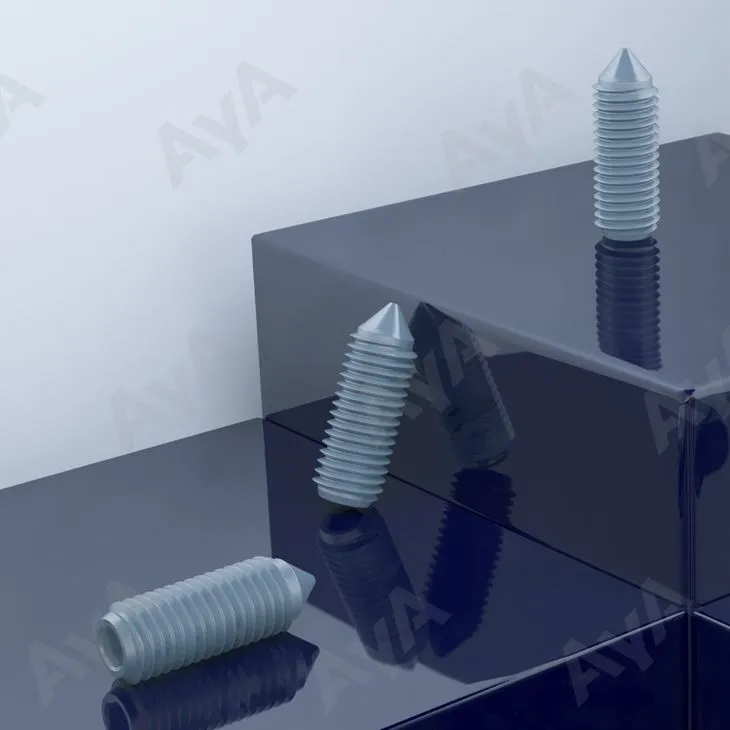
Set screws work by applying pressure against the surface they're securing. This pressure can cause damage to the shaft or the component they're attached to. For instance, when you use a Square Head Set Screw Dog Point, the pointed end digs into the material. Over time, this can create small indentations or even cracks in the shaft. These damages can weaken the overall structure and may lead to premature failure of the equipment. In some cases, the damage can be so severe that you have to replace the entire shaft or component, which can be expensive and time - consuming.
3. Loosening Over Time
Vibration is a common enemy of set screws. In machinery that experiences a lot of vibration, set screws can gradually loosen. This is because the constant shaking causes the screw to back out slightly with each movement. For example, in a motor or a pump that runs continuously, the vibrations can be enough to make the set screw lose its grip. Once a set screw starts to loosen, it can lead to all sorts of problems. The component it's holding in place may shift, which can affect the performance of the entire machine. And if the set screw comes out completely, it can cause serious damage to the equipment or even pose a safety hazard.
4. Torque Requirements
Getting the right torque when tightening set screws is crucial. If you don't apply enough torque, the set screw won't hold the component securely. On the other hand, if you over - torque it, you can strip the threads or break the screw. Determining the correct torque can be tricky, especially for those who aren't experienced with set screws. Different materials and sizes of set screws have different torque requirements, and it's not always easy to find the right information. For example, a Dog Point Hex Head Screw made of stainless steel may require a different torque than one made of carbon steel. And if you're using a Hex Socket Set Screw, you need to make sure you're using the right tool to apply the torque evenly.
5. Corrosion
Set screws are often exposed to various environmental conditions, and corrosion can be a significant issue. If the set screws are made of materials that aren't corrosion - resistant, they can rust or corrode over time. This not only weakens the screw but also makes it difficult to remove or adjust. For example, in a marine environment or a place with high humidity, set screws can start to corrode quickly. Once corrosion sets in, it can spread and affect the surrounding components as well. And replacing corroded set screws can be a hassle, especially if they're in hard - to - reach places.
6. Aesthetics
In some applications where appearance matters, set screws may not be the best choice. Set screws are usually visible, and their design is more functional than aesthetic. They can look a bit industrial and out of place in settings where a more polished look is desired. For example, in furniture or decorative items, the presence of set screws can detract from the overall appearance. You might have to use additional covers or finishes to hide the set screws, which adds to the cost and complexity of the project.

7. Installation Difficulty
Installing set screws can be a bit of a challenge, especially in tight spaces. You need to have the right tools and a good amount of dexterity to get the screw in place and tightened properly. In some cases, you may need to use special tools to reach the set screw, which can be expensive and not readily available. And if the installation is not done correctly, it can lead to all the problems we've already discussed, like loosening, damage to the component, and improper torque.
8. Limited Load - Bearing Capacity
Set screws are not designed to handle extremely heavy loads. Compared to other types of fasteners, their load - bearing capacity is relatively limited. If you try to use a set screw in an application where it has to support a large amount of weight or force, it can fail. This can be dangerous, especially in industrial or mechanical settings. For example, in a crane or a large - scale manufacturing machine, relying on set screws to hold critical components together can lead to catastrophic failures.
Despite these disadvantages, set screws still have their place in many applications. They're simple, cost - effective, and can be very useful in certain situations. At our company, we understand the limitations of set screws, and we're always here to help you choose the right product for your needs. If you're facing any issues with set screws or if you're looking for advice on which type to use, don't hesitate to reach out. We can have a chat about your project and figure out the best solution together. Whether you need a Square Head Set Screw Dog Point, a Dog Point Hex Head Screw, or a Hex Socket Set Screw, we've got you covered. So, if you're in the market for set screws or just want to learn more, contact us for a friendly and professional discussion.
References
- Machinery's Handbook, 31st Edition
- Fasteners and their Applications by Henry Petroski
- Handbook of Fastening Technology for the Manufacturing Industries