How Europe's EV Battery Expansion Is Changing Fastener Requirements
Jul 21, 2026

Europe's electric vehicle battery industry continues to grow as new battery plants and production lines are announced across Germany, France, Spain, Hungary, and other manufacturing hubs. According to the European Commission's Strategic Action Plan on Batteries, strengthening battery production is a key step toward building a competitive European EV supply chain.
While discussions often focus on battery technology and production capacity, another change is happening behind the scenes. As battery manufacturing becomes more automated and quality standards continue to rise, fasteners are playing a much more important role in ensuring stable production and long-term product reliability.

1. Why Battery Production Demands Higher Precision
Battery manufacturing involves thousands of mechanical connections throughout production equipment, battery modules, packs, and supporting structures. Small dimensional variations that may be acceptable in general industrial applications can create assembly issues in highly automated production lines.
1. Automation leaves little room for variation
Automated assembly relies on consistent bolt dimensions, stable thread quality, and repeatable tightening performance. Even minor differences can increase downtime or require additional adjustments.
2. Every connection affects production efficiency
Reliable fastening helps reduce assembly interruptions while improving overall manufacturing consistency, making precision just as important as strength.
2. New Materials Bring New Engineering Challenges
Battery systems increasingly combine steel, aluminum, stainless steel, and composite materials within the same assembly. While these materials improve vehicle performance, they also create new fastening challenges.
Different materials expand at different rates, respond differently to vibration, and require suitable corrosion protection. Selecting the wrong fastener or coating can shorten service life and increase maintenance risks.
| Battery Application | Fastener Consideration |
|---|---|
| Battery enclosure | Corrosion resistance |
| Module assembly | Tight dimensional tolerance |
| Cooling system | Material compatibility |
| Structural frame | High-strength connection |
Instead of selecting standard fasteners based only on size, many manufacturers now evaluate the complete application before finalizing the fastening solution.
3. Why Custom Fasteners Are Becoming More Common
As battery systems become more compact, standard fasteners cannot always meet every design requirement. Engineers are increasingly looking for fastening solutions that match the product rather than modifying the product to fit standard components.
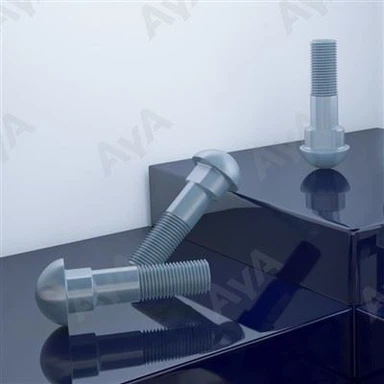
Some projects require special thread lengths, non-standard head designs, tighter tolerances, or application-specific coatings. These changes may appear minor, but they can improve assembly efficiency, reduce production issues, and support long-term reliability.
✓ Custom fasteners help simplify assembly when space is limited or standard dimensions no longer fit the design.
✓ Application-specific materials and surface treatments can improve durability in demanding battery operating environments.
4. Engineering Collaboration Starts Before Production
Many fastening challenges can be identified long before mass production begins. By reviewing drawings, materials, and assembly requirements during the design stage, manufacturers can reduce engineering changes later in the project.
A strong fastening partner contributes more than manufacturing capability. Engineering support, material recommendations, prototype validation, and consistent quality control all help reduce project risks while improving production efficiency.
For battery manufacturers, selecting the right fastener supplier is becoming part of product development rather than simply a purchasing decision.
5. Supporting Europe's Next Generation of Battery Manufacturing
Europe's battery industry is moving toward higher automation, stricter quality standards, and greater production efficiency. As these expectations continue to rise, fastening solutions must evolve alongside them.
At AYA Fasteners, we provide custom bolts, screws, nuts, and washers for OEM and industrial applications. From material selection and engineering review to precision manufacturing and surface treatment, we help customers develop fastening solutions that match the specific requirements of their projects.
Conclusion
Europe's EV battery expansion is creating new expectations for fastening performance. Precision, material compatibility, corrosion resistance, and manufacturing consistency are becoming essential throughout the production process. Choosing the right fastening solution early in a project not only improves assembly efficiency but also supports long-term product reliability.