

What is the typical finish of hex bolts?
Nov 10, 2025
Hex bolts are essential fasteners used in a wide range of industries and applications, from construction and automotive to machinery and furniture. The finish of a hex bolt is not just a matter of aesthetics; it plays a crucial role in determining the bolt's performance, durability, and resistance to corrosion. As a leading supplier of hex bolts, we understand the importance of offering a variety of finishes to meet the diverse needs of our customers. In this blog post, we will explore the typical finishes of hex bolts, their characteristics, and the applications where they are most suitable.
Zinc Plating
Zinc plating is one of the most common finishes for hex bolts. It involves depositing a thin layer of zinc onto the surface of the bolt through an electroplating process. Zinc is a sacrificial metal, which means it corrodes preferentially to the underlying steel, providing a protective barrier against rust and corrosion.
There are different types of zinc plating, including clear zinc, yellow zinc, and black zinc. Clear zinc plating provides a thin, transparent layer of zinc that offers basic corrosion resistance. It is often used in indoor applications where the bolts are not exposed to harsh environmental conditions. Yellow zinc plating contains a small amount of chromate, which gives the bolts a yellowish tint and enhances their corrosion resistance. It is commonly used in automotive and industrial applications. Black zinc plating is similar to yellow zinc plating but has a black finish, which provides better aesthetics and some additional corrosion resistance. It is often used in applications where a more discreet appearance is desired.
Zinc-plated hex bolts are relatively inexpensive and offer good corrosion resistance in mild to moderate environments. However, they may not be suitable for use in highly corrosive environments, such as marine or chemical processing applications.

Hot-Dip Galvanizing
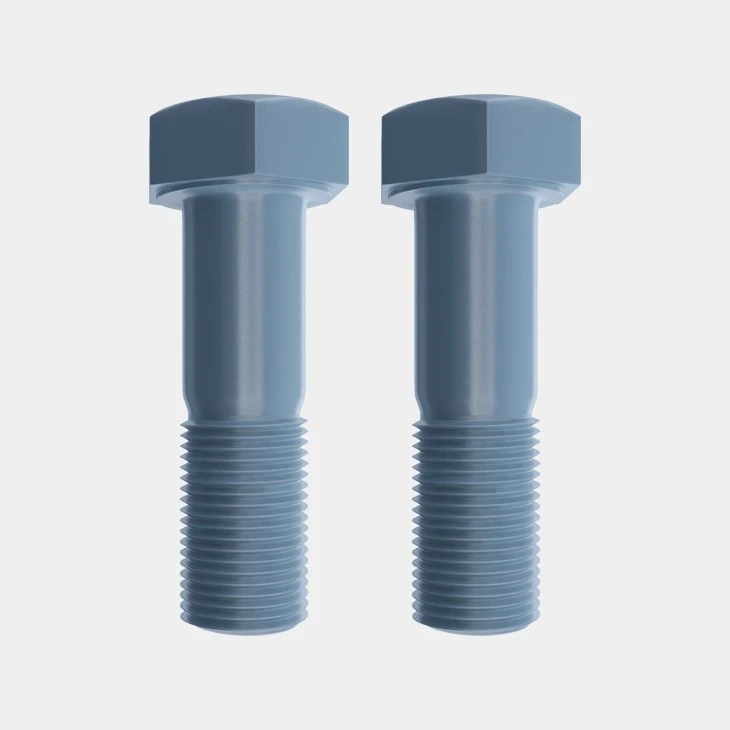
Hot-dip galvanizing is a more robust and durable finish for hex bolts. It involves immersing the bolts in a bath of molten zinc at a temperature of around 450°C (842°F). The zinc reacts with the steel to form a series of zinc-iron alloy layers, which provide excellent corrosion resistance.
Hot-dip galvanized hex bolts have a thick, rough finish that is highly resistant to rust, corrosion, and abrasion. They are commonly used in outdoor and marine applications, such as bridges, buildings, and coastal structures. The thick zinc coating can provide long-term protection in harsh environments, with a service life of up to 50 years or more.
However, hot-dip galvanizing is a more expensive process than zinc plating, and the thick coating can make the bolts slightly larger in diameter. This may require some adjustments in the design and installation of the fasteners. Additionally, the rough finish of hot-dip galvanized bolts may not be suitable for applications where a smooth or aesthetically pleasing appearance is required.
Stainless Steel
Stainless steel is a popular choice for hex bolts in applications where corrosion resistance is of utmost importance. Stainless steel contains chromium, which forms a passive oxide layer on the surface of the metal, protecting it from corrosion. There are different grades of stainless steel, each with its own composition and properties.
The most common grades of stainless steel used for hex bolts are 304 and 316. Grade 304 stainless steel is a general-purpose grade that offers good corrosion resistance in most environments. It is commonly used in indoor and outdoor applications, such as food processing, chemical processing, and architectural applications. Grade 316 stainless steel contains molybdenum, which enhances its corrosion resistance in chloride-rich environments, such as marine and coastal applications.
Stainless steel hex bolts are more expensive than zinc-plated or hot-dip galvanized bolts, but they offer superior corrosion resistance and a longer service life. They are also resistant to staining, rusting, and pitting, making them suitable for applications where a clean and hygienic appearance is required.
Black Oxide
Black oxide is a chemical conversion coating that is applied to the surface of hex bolts to provide a black finish. It involves treating the bolts with a solution of sodium hydroxide, nitrates, and nitrites, which reacts with the iron in the steel to form a thin layer of magnetite (Fe3O4).
Black oxide provides a relatively thin and uniform finish that offers some corrosion resistance and a sleek, black appearance. It is often used in applications where a low-reflectivity finish is desired, such as in firearms, automotive, and aerospace industries. Black oxide also provides some lubricity, which can make the bolts easier to install and remove.
However, black oxide is not as corrosion-resistant as zinc plating, hot-dip galvanizing, or stainless steel. It is typically used in indoor applications or in environments where the bolts are not exposed to harsh chemicals or moisture. For more information on black oxide hex bolts, you can visit our website at Black Oxide Hex Bolts.
Other Finishes
In addition to the above finishes, there are other specialized finishes that can be applied to hex bolts depending on the specific requirements of the application. Some of these finishes include:
- Phosphate Coating: Phosphate coating is a chemical conversion coating that provides a porous surface that can absorb oil or paint. It is often used as a base coat for further finishing or as a lubricant for assembly operations.
- Nickel Plating: Nickel plating provides a bright, shiny finish that offers good corrosion resistance and a decorative appearance. It is commonly used in applications where a high-quality finish is required, such as in jewelry, electronics, and automotive trim.
- Chrome Plating: Chrome plating provides a hard, durable finish that offers excellent corrosion resistance and a mirror-like appearance. It is often used in applications where a high level of aesthetics and corrosion resistance is required, such as in automotive and motorcycle parts.
Choosing the Right Finish
When choosing the finish for your hex bolts, it is important to consider the following factors:
- Environment: The environment in which the bolts will be used is the most important factor to consider. If the bolts will be exposed to moisture, chemicals, or high temperatures, you will need a finish that provides good corrosion resistance.
- Aesthetics: The appearance of the bolts may also be important, especially in applications where the bolts are visible. You may choose a finish that matches the color or style of the surrounding components.
- Cost: The cost of the finish is another important factor to consider. Some finishes, such as stainless steel and hot-dip galvanizing, are more expensive than others, such as zinc plating and black oxide. You will need to balance the cost of the finish with the performance and durability requirements of the application.
- Application Requirements: The specific requirements of the application, such as the load capacity, torque requirements, and installation method, may also influence the choice of finish. For example, if the bolts will be subjected to high torque, you may need a finish that provides good lubricity to prevent galling.
As a supplier of hex bolts, we offer a wide range of finishes to meet the diverse needs of our customers. Whether you need zinc-plated, hot-dip galvanized, stainless steel, or black oxide hex bolts, we have the expertise and resources to provide you with the right product for your application. We also offer custom finishing options to meet your specific requirements.
If you are interested in purchasing hex bolts or have any questions about our products and finishes, please feel free to contact us. Our team of experts will be happy to assist you in choosing the right finish for your application and provide you with a competitive quote. We look forward to working with you and helping you find the perfect hex bolts for your project.
References
- ASM Handbook, Volume 5: Surface Engineering, ASM International, 1994.
- Corrosion Resistance of Metals and Alloys, Third Edition, Robert Winston Revie, Elsevier, 2011.
- Fasteners Handbook, Second Edition, Henry Petroski, McGraw-Hill, 2002.