

What is the surface roughness of hex nuts?
Sep 29, 2025
Hey there! As a hex nuts supplier, I often get asked about all sorts of things related to these little but super - important fasteners. One question that pops up more than you'd think is, "What is the surface roughness of hex nuts?" Let's dive right in and break it down.
First off, surface roughness is a big deal when it comes to hex nuts. It's not just about how the nut looks on the outside; it has a huge impact on how well the nut functions. You see, the surface roughness of a hex nut refers to the small, irregular deviations from a perfectly smooth surface. These deviations can be in the form of tiny peaks and valleys on the nut's exterior.
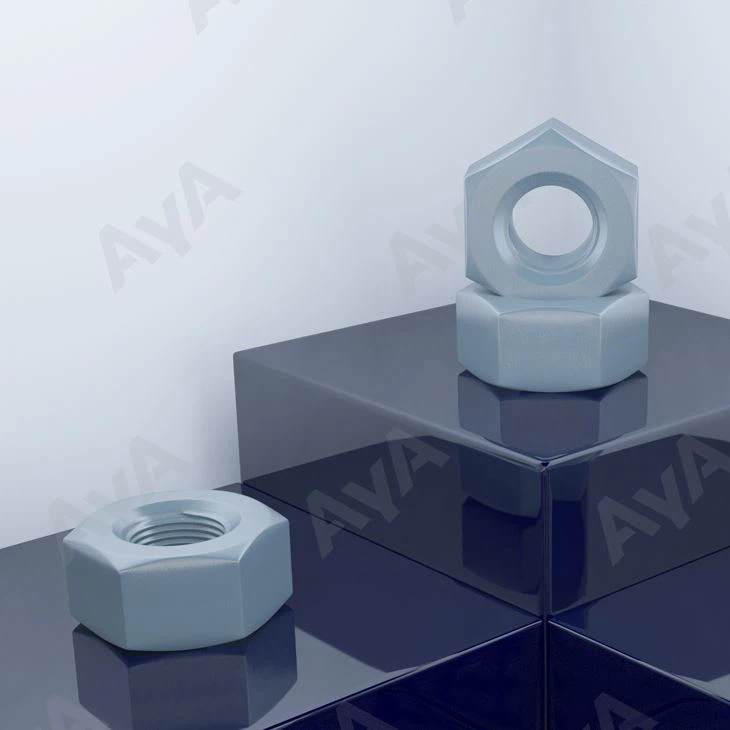

Now, why does this matter? Well, for starters, it affects the way the nut fits onto a bolt. If the surface is too rough, it can make it difficult to thread the nut onto the bolt. You might find yourself having to use a lot more force than necessary, which can lead to stripped threads on either the nut or the bolt. On the other hand, if the surface is too smooth, the nut might not grip the bolt as well as it should, which could cause it to loosen over time.
There are several factors that can influence the surface roughness of hex nuts. One of the main factors is the manufacturing process. We use different methods to make hex nuts, like cold forging, machining, and hot forging. Each of these processes can leave a different mark on the surface of the nut.
Cold forging is a popular method. In this process, we shape the nut at room temperature. It generally produces a relatively smooth surface, but there can still be some minor roughness due to the tools used and the pressure applied during forging. Machining, on the other hand, involves cutting and shaping the nut using tools like lathes and mills. This can result in a more precise surface finish, but it can also create some tool marks that contribute to the surface roughness. Hot forging, where the metal is heated to a high temperature before shaping, can sometimes lead to a rougher surface because of the oxidation and scaling that can occur during the heating process.
Another factor is the material used to make the hex nut. Different metals have different properties, and these can affect how the surface turns out. For example, steel hex nuts are very common. Steel is a tough material, but it can be prone to rust if not properly treated. When we apply a coating to the steel to prevent rust, like zinc plating, it can also change the surface roughness. A Zinc Plated Hex Nut will have a different surface texture compared to an uncoated steel nut. The zinc coating can add a bit of thickness and a different feel to the surface.
Brass hex nuts are also popular. Brass has a more natural resistance to corrosion compared to steel, and it often has a smoother surface finish right out of the manufacturing process. However, just like steel nuts, brass nuts can also be coated or treated in various ways, which can alter their surface roughness.
We also offer Thin Hex Nuts. These nuts are thinner than regular hex nuts, and their surface roughness requirements can be a bit different. Because they are thinner, they might need to have a smoother surface to ensure a proper fit and function. A rough surface on a thin hex nut could cause it to crack or break more easily under stress.
And then there are Black Hex Nut. The black finish on these nuts is usually achieved through a process like black oxide coating. This coating not only gives the nut an aesthetically pleasing look but also provides some corrosion resistance. However, the coating process can also affect the surface roughness. The black oxide coating might add a slightly different texture to the surface, which could either increase or decrease the overall roughness depending on how it's applied.
Measuring the surface roughness of hex nuts is an important part of our quality control process. We use specialized instruments to measure the height of the peaks and valleys on the surface. The most common way to measure surface roughness is by using a profilometer. This device runs a tiny stylus over the surface of the nut and measures the vertical deviations. The results are usually given in units like micrometers (μm).
The acceptable range of surface roughness for hex nuts can vary depending on the application. In some industries, like aerospace and automotive, very strict standards are in place. These industries require nuts with a very smooth surface to ensure reliable performance. For example, in an aircraft engine, a loose or poorly fitting nut could have catastrophic consequences. So, the surface roughness of the nuts used in these applications needs to be within a very narrow range.
In less critical applications, like general construction or DIY projects, the requirements for surface roughness might not be as strict. However, even in these cases, we still make sure that the nuts have a surface roughness that allows for easy installation and a good grip on the bolt.
As a hex nuts supplier, we take surface roughness very seriously. We know that it can make or break the performance of our products. That's why we have a team of experts who are constantly monitoring and adjusting the manufacturing process to ensure that our nuts meet the highest quality standards.
If you're in the market for hex nuts, whether it's for a large - scale industrial project or a small home repair, we've got you covered. We offer a wide range of hex nuts in different materials, sizes, and finishes. And we're always happy to answer any questions you might have about surface roughness or any other aspect of our products.
So, if you're interested in learning more or want to place an order, don't hesitate to get in touch with us. We're here to help you find the perfect hex nuts for your needs. Let's start a conversation and see how we can work together to get your project done right.
References
- "Mechanical Fasteners Handbook"
- "Manufacturing Processes for Engineering Materials"