

What is the difference between hot - forged and cold - forged carriage bolts?
Dec 16, 2025
What is the difference between hot - forged and cold - forged carriage bolts?
Hey there! I'm a supplier of carriage bolts, and I often get asked about the difference between hot - forged and cold - forged carriage bolts. So, let's dive right in and explore these two manufacturing methods.
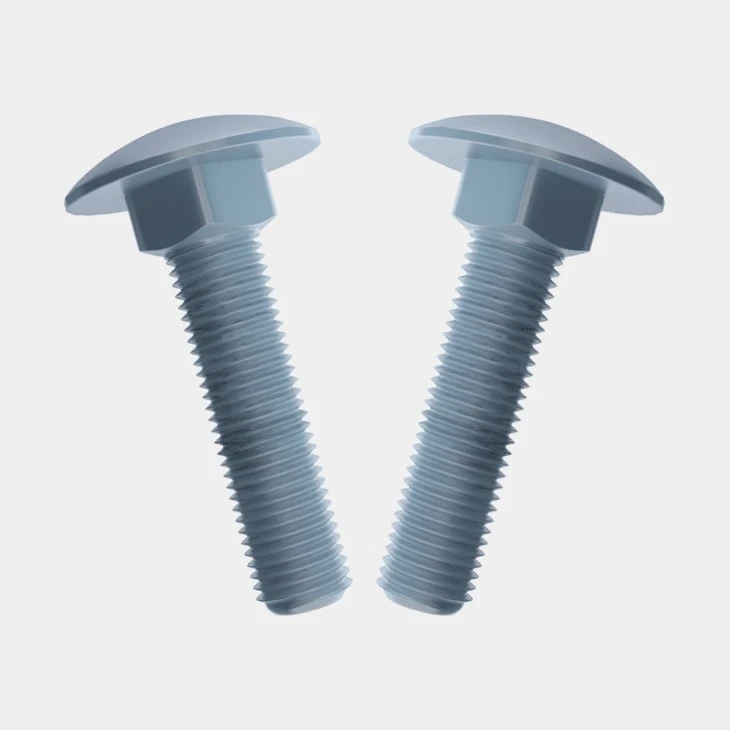
First off, let's understand what carriage bolts are. Carriage bolts are those handy fasteners with a round head and a square section under the head. They're used in a whole bunch of applications, like wood - to - wood or wood - to - metal connections. You can find different types on my site, such as Round Head Carriage Bolt, Black Zinc Carriage Bolts, and Hot Dipped Galvanized Carriage Bolts.
Hot - Forged Carriage Bolts
Hot forging is an age - old manufacturing process. In hot forging, the metal (usually steel) is heated to a really high temperature, often above 1,000 degrees Celsius. This high temperature makes the metal soft and malleable, like clay.
One of the big advantages of hot - forged carriage bolts is their excellent mechanical properties. The high - temperature forging process refines the grain structure of the metal. A refined grain structure means the bolt has better strength, toughness, and ductility. This makes hot - forged carriage bolts ideal for heavy - duty applications. For example, if you're building a large - scale wooden structure like a barn or a bridge, hot - forged carriage bolts can handle the high stress and load without breaking or deforming easily.
Another benefit is that hot forging allows for complex shapes. The soft metal can be shaped into different head designs and thread profiles with relative ease. So, if you have a custom project that requires a non - standard carriage bolt design, hot forging can likely accommodate it.
However, hot forging also has some downsides. The process is energy - intensive because of all the heating required. This means it can be more expensive to produce hot - forged carriage bolts compared to their cold - forged counterparts. Also, the high temperature can sometimes cause surface oxidation or scaling on the bolts. Extra processing steps like descaling may be needed to remove this unsightly layer and get a smooth finish.
Cold - Forged Carriage Bolts
Cold forging, on the other hand, is done at or near room temperature. This process uses high - pressure machinery to shape the metal. Special dies and punches are used to form the bolt head, square under the head, and the threads.
Cold - forged carriage bolts have their own set of advantages. One of the biggest is precision. The cold - forging process can produce bolts with very tight tolerances. This means the dimensions of the bolts are very accurate, which is crucial in applications where a perfect fit is required. For instance, in the automotive or aerospace industries, components need to fit together precisely, and cold - forged carriage bolts can meet those strict requirements.
Cold forging also results in a better surface finish. Since there's no high - temperature oxidation, the bolts come out with a smooth, clean surface. This can be beneficial in terms of aesthetics and also in preventing corrosion, as a smooth surface has fewer crevices for moisture to accumulate.
Cost - wise, cold forging can be more economical for high - volume production. The process is generally faster and requires less energy compared to hot forging. So, if you need a large quantity of carriage bolts for a regular project, cold - forged ones can be a more budget - friendly option.
But cold forging isn't without its limitations. The metal used in cold forging needs to be relatively soft and ductile at room temperature to avoid cracking during the forming process. This means that cold - forged carriage bolts may not be as strong as their hot - forged counterparts in some high - stress applications. Also, the complexity of shapes that can be achieved in cold forging is somewhat limited compared to hot forging.
Comparing the Two in Different Use - Cases
Let's look at how these two types of carriage bolts fare in different real - world scenarios.
Construction: In general construction work, where you're dealing with normal loads and a variety of materials, both types can be used. For simple wood - to - wood connections in a residential deck, cold - forged carriage bolts can work just fine. They're cost - effective and have a good enough strength for the job. However, if you're building a large industrial structure or a high - rise building where the bolts will be under significant stress, hot - forged carriage bolts are the better choice.
Automotive and Machinery: In the automotive and machinery industries, precision is key. Cold - forged carriage bolts are often preferred here because of their tight tolerances and smooth surface finish. They ensure that the components fit together perfectly, reducing the risk of mechanical failures. But in some high - stress parts of an engine or heavy machinery, hot - forged bolts may be used to handle the extreme forces.
Outdoor and Corrosive Environments: For outdoor applications, corrosion resistance is important. Both hot - dipped galvanized hot - forged and cold - forged carriage bolts are available. The hot - dipped galvanizing process provides a protective zinc coating. However, the smooth surface of cold - forged bolts may offer slightly better initial corrosion resistance as there are fewer areas for moisture to collect.
Making the Right Choice
When it comes to choosing between hot - forged and cold - forged carriage bolts, you need to consider several factors. First, think about the application. What kind of load will the bolt be under? Is precision a must? Also, consider your budget. If you're on a tight budget and the application doesn't require extremely high strength, cold - forged bolts might be the way to go. But if you need a bolt that can withstand heavy loads and complex stress conditions, hot - forged is the better option.
As a carriage bolt supplier, I'm here to help you make the right choice. If you're not sure which type of carriage bolt is suitable for your project, just let me know the details. Whether it's the size, the material, or the application, I can provide you with expert advice and high - quality products.

If you're interested in purchasing carriage bolts, whether it's Round Head Carriage Bolt, Black Zinc Carriage Bolts, or Hot Dipped Galvanized Carriage Bolts, don't hesitate to reach out. We can discuss your requirements and work out a deal that suits you.
References
- ASM Handbook Volume 14A: Metalworking: Forging. ASM International.
- Machinery's Handbook, 31st Edition. Industrial Press Inc.