

What are the requirements for the concrete strength when installing foundation bolts?
Oct 21, 2025
Hey there! As a foundation bolt supplier, I often get asked about the requirements for concrete strength when installing foundation bolts. It's a crucial topic because the right concrete strength ensures that foundation bolts perform their job effectively, providing stability and support for all sorts of structures. So, let's dive into this and figure out what you need to know.
Why Concrete Strength Matters
First off, why does concrete strength matter when it comes to foundation bolts? Well, foundation bolts are used to anchor structures to the concrete foundation. They transfer loads from the structure to the foundation, and if the concrete isn't strong enough, it can lead to all sorts of problems. Weak concrete might crack or crumble under the load, causing the foundation bolts to loosen or even fail. This can compromise the safety and stability of the entire structure, which is definitely not something we want.
Factors Affecting Concrete Strength Requirements
There are several factors that determine the concrete strength requirements for installing foundation bolts. Let's take a look at some of the most important ones.
Load Type and Magnitude
The type and magnitude of the load that the foundation bolts will be subjected to play a huge role. If it's a light - duty structure like a small shed, the load on the foundation bolts will be relatively low, and you might be able to get away with a lower - strength concrete. On the other hand, for heavy - duty structures such as industrial buildings or bridges, the loads can be massive. In these cases, you'll need high - strength concrete to ensure that the foundation bolts can transfer the loads safely to the foundation.
Bolt Size and Spacing
The size and spacing of the foundation bolts also matter. Larger bolts can generally handle more load, but they also require stronger concrete to support them properly. Similarly, if the bolts are spaced far apart, the concrete between them needs to be strong enough to distribute the load evenly.
Environmental Conditions
Environmental conditions can have a big impact on concrete strength requirements. In areas with harsh weather conditions, such as freezing and thawing cycles, the concrete needs to be more durable. Frost can cause the concrete to expand and crack, so a higher - strength concrete with good freeze - thaw resistance is necessary. Also, in areas with high humidity or exposure to chemicals, the concrete should be able to resist corrosion, which may require additional additives or a higher - strength mix.
Minimum Concrete Strength Requirements
So, what are the minimum concrete strength requirements for installing foundation bolts? Well, it depends on the application, but as a general rule of thumb:
For light - duty applications, a concrete compressive strength of around 2000 - 3000 psi (pounds per square inch) might be sufficient. This could be used for small structures like fences or small storage units.
For medium - duty applications, such as residential buildings, a concrete strength of 3000 - 4000 psi is often recommended. This provides enough strength to support the weight of the building and any additional loads.
For heavy - duty applications, like industrial facilities or large bridges, the concrete strength should be at least 4000 - 5000 psi or even higher in some cases. High - strength concrete in these applications ensures the long - term stability and safety of the structure.
Testing Concrete Strength
Before installing foundation bolts, it's essential to test the concrete strength to make sure it meets the requirements. There are a few different ways to do this.
Compressive Strength Testing
The most common method is compressive strength testing. This involves taking concrete cylinders or cubes during the concrete pour and curing them under controlled conditions. After a specified curing period (usually 28 days), the specimens are tested in a compression testing machine to determine their compressive strength. If the results meet or exceed the required strength, the concrete is considered suitable for installing the foundation bolts.
Non - Destructive Testing
Non - destructive testing methods can also be used to assess the concrete strength. These methods include techniques like ultrasonic pulse velocity testing and rebound hammer testing. Ultrasonic pulse velocity testing measures the speed of sound waves through the concrete, which is related to its density and strength. Rebound hammer testing measures the hardness of the concrete surface, which can give an indication of its strength. While these methods are less accurate than compressive strength testing, they can provide a quick and easy way to get an idea of the concrete strength on - site.
Choosing the Right Foundation Bolts and Related Products
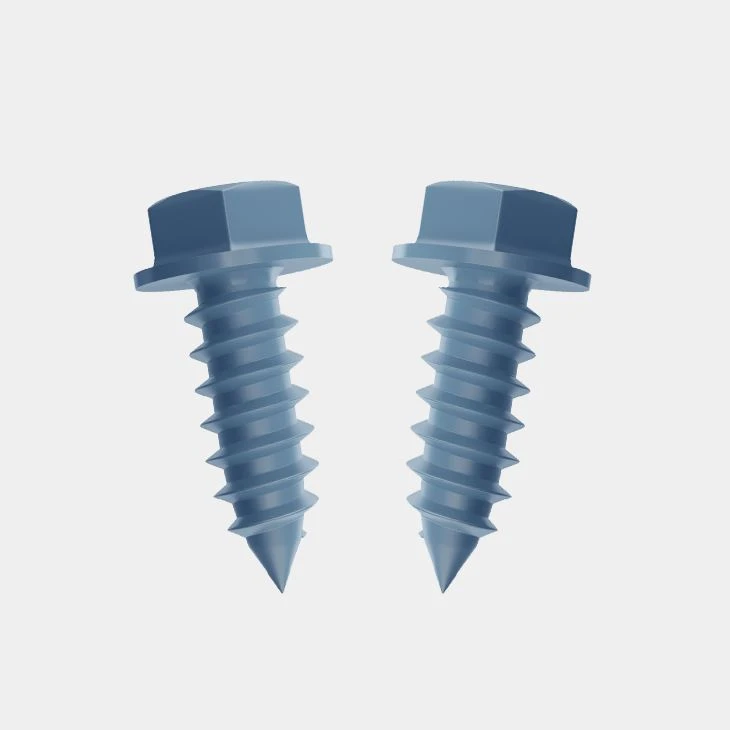
As a foundation bolt supplier, I can't stress enough the importance of choosing the right foundation bolts and related products. Along with foundation bolts, you might need washers, nuts, and other fasteners. For example, a Washer Hex Head Screw can be used in some applications to provide additional stability. And Stainless Steel Hex Nut is a great choice for its corrosion resistance, especially in outdoor or harsh environments. If you're working on a wood - related project, Black Plated Flat Head Wood Screws might come in handy.
Installation Considerations
Once you've determined the right concrete strength and chosen the appropriate foundation bolts, proper installation is key. Here are some installation considerations:
Proper Embedding Depth
The foundation bolts need to be embedded to the proper depth in the concrete. This ensures that they have enough grip and can transfer the loads effectively. The embedding depth usually depends on the bolt size and the expected load.
Alignment
The bolts must be aligned correctly during installation. Misaligned bolts can cause problems with the installation of the structure and can also lead to uneven loading on the bolts and the concrete.
Grouting
In some cases, grouting may be required around the foundation bolts. Grouting helps to fill any voids between the bolt and the concrete, providing additional support and improving the load - transfer mechanism.
Conclusion
In conclusion, the requirements for concrete strength when installing foundation bolts depend on a variety of factors, including load type and magnitude, bolt size and spacing, and environmental conditions. By understanding these factors and following the proper testing and installation procedures, you can ensure that your foundation bolts work effectively and provide long - term stability for your structure.
If you're in the market for foundation bolts or related products, don't hesitate to reach out. I'm here to help you find the right solutions for your project. Whether it's a small DIY job or a large - scale industrial project, I've got the expertise and the products to meet your needs. Let's start a conversation and get your project on the right track!
References
- "Concrete Construction Handbook" by Edward G. Nawy
- "Foundation Design and Construction" by Donald P. Coduto