

How to test the performance of square bolts?
Dec 30, 2025
Testing the performance of square bolts is a crucial aspect of ensuring their quality and reliability in various applications. As a leading supplier of square bolts, we understand the significance of providing high - performance products to our customers. In this blog, we will delve into the methods and procedures for testing the performance of square bolts.
Tensile Testing
Tensile testing is one of the most fundamental and important tests for square bolts. This test measures the maximum amount of tensile stress a bolt can withstand before it breaks. To conduct a tensile test, a sample of the square bolt is placed in a testing machine. The ends of the bolt are firmly gripped, and a gradually increasing pulling force is applied along the axis of the bolt.
The testing machine records the force applied and the corresponding elongation of the bolt. As the force increases, the bolt will initially deform elastically, meaning it will return to its original shape when the force is removed. However, once the yield point is reached, the bolt will start to deform plastically. The ultimate tensile strength is the maximum stress the bolt can withstand, and the yield strength is the stress at which the bolt begins to deform plastically.
For square bolts used in structural applications, high tensile strength is essential. For example, in construction projects, square bolts need to bear heavy loads without breaking. Our Square Head Stud undergoes rigorous tensile testing to ensure it meets the required standards.
Hardness Testing
Hardness is another critical property of square bolts. Hardness testing measures the resistance of the bolt's material to indentation or scratching. A hard bolt is less likely to deform under load and is more resistant to wear and tear.
There are several methods for hardness testing, including the Brinell, Rockwell, and Vickers methods. In the Brinell method, a hardened steel ball is pressed into the surface of the bolt under a specific load. The diameter of the indentation is then measured, and the hardness value is calculated based on the load and the indentation size.
The Rockwell method uses a diamond cone or a hardened steel ball indenter. The depth of the indentation is measured, and the hardness value is read directly from the testing machine. The Vickers method uses a square - based pyramid indenter, and the hardness is calculated from the size of the indentation.
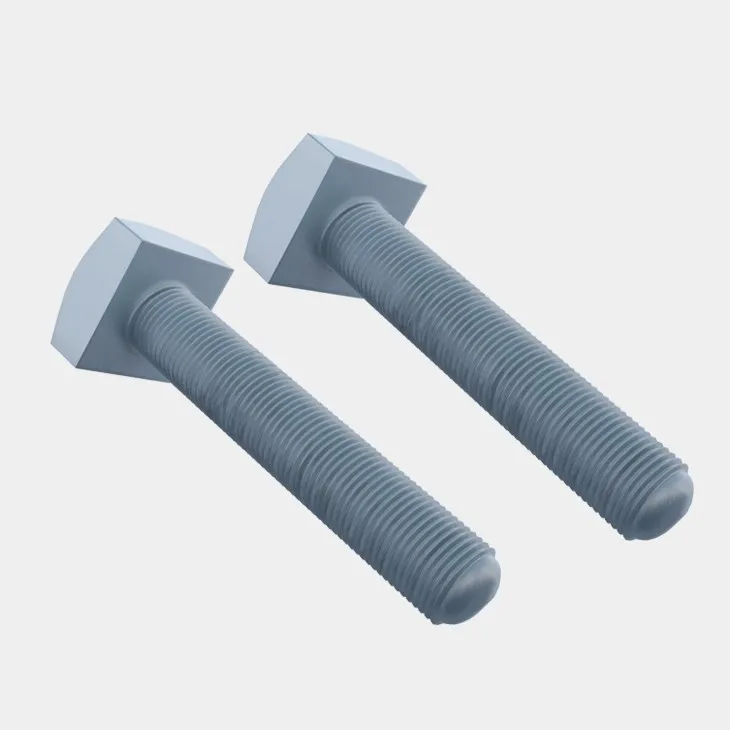

By ensuring the proper hardness of our square bolts, we can guarantee their durability. Our Galvanized Square Bolts are tested for hardness to ensure they can withstand harsh environmental conditions and mechanical stresses.
Torque Testing
Torque testing is used to determine the amount of torque required to tighten a square bolt to a specific pre - load. Proper torque is crucial for ensuring that the bolted joint functions correctly. If the torque is too low, the joint may loosen over time, leading to potential safety hazards. If the torque is too high, the bolt may break or damage the mating parts.
To perform a torque test, a torque wrench is used to apply a specific amount of torque to the bolt. The pre - load on the bolt is then measured using a load cell or other measuring devices. The relationship between the torque and the pre - load is influenced by factors such as the friction coefficient between the bolt and the nut, and the surface finish of the bolt.
Our Square Head Machine Bolts are carefully torque - tested to ensure that they can be tightened to the appropriate level, providing a secure and reliable connection.
Corrosion Resistance Testing
Since square bolts are often used in various environments, corrosion resistance is an important performance factor. Corrosion can weaken the bolt, reduce its strength, and ultimately lead to failure.
There are several methods for testing corrosion resistance. One common method is the salt spray test. In this test, the square bolts are placed in a chamber where a salt - water solution is sprayed onto them. The test is conducted for a specific period, and the degree of corrosion on the bolts is then evaluated.
Another method is the immersion test, where the bolts are immersed in a corrosive solution for a certain time. After the immersion, the surface of the bolts is examined for signs of corrosion, such as rust or pitting.
Our galvanized square bolts are designed to have excellent corrosion resistance. Through strict corrosion resistance testing, we can ensure that our products can be used in outdoor and humid environments without significant corrosion.
Fatigue Testing
In applications where square bolts are subjected to repeated loading and unloading, fatigue testing is necessary. Fatigue failure occurs when a bolt fails under cyclic loading, even though the applied stress is below the ultimate tensile strength.
During fatigue testing, a cyclic load is applied to the bolt. The number of cycles the bolt can withstand before failure is recorded. The testing machine can apply different types of cyclic loads, such as tension - tension, compression - compression, or tension - compression loads.
For example, in automotive applications, square bolts may be subjected to repeated vibrations and shocks. Fatigue testing helps us ensure that our square bolts can withstand these cyclic loads over a long period, providing reliable performance.
Conclusion
Testing the performance of square bolts is a comprehensive process that involves multiple aspects. By conducting tensile testing, hardness testing, torque testing, corrosion resistance testing, and fatigue testing, we can ensure that our square bolts meet the highest quality standards.
As a trusted supplier of square bolts, we are committed to providing our customers with products that offer excellent performance and reliability. Whether you need Square Head Stud, Galvanized Square Bolts, or Square Head Machine Bolts, we have the right products for your needs.
If you are interested in our square bolts and would like to discuss your specific requirements, please feel free to contact us for a procurement negotiation. We look forward to working with you to provide the best square bolt solutions for your projects.
References
- ASTM International. "Standard Test Methods for Tension Testing of Metallic Materials."
- ISO Standards. "ISO 6892 - 1:2019 Metallic materials — Tensile testing — Part 1: Method of test at room temperature."
- ASME Standards. "ASME B18.2.3.2M - 2013 Square and Hex Bolts and Screws (Metric Series)."