

How to determine the correct number of spring washers to use?
Dec 01, 2025
Determining the correct number of spring washers to use is a crucial aspect in various mechanical and engineering applications. As a seasoned spring washer supplier, I've witnessed firsthand the impact of using the right quantity of these essential components. In this blog, I'll share insights on how to make this determination accurately.
Understanding the Function of Spring Washers
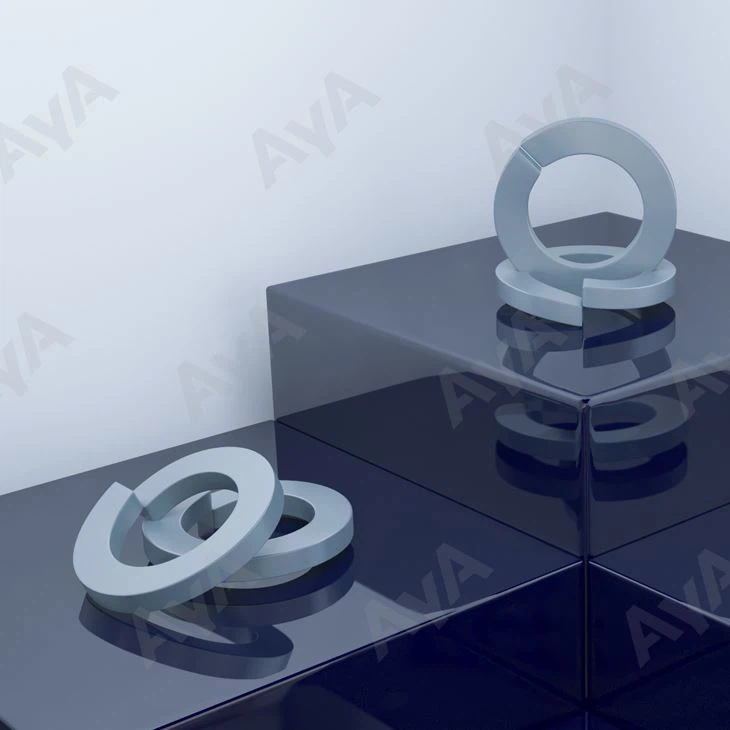
Spring washers are designed to provide a spring force that helps maintain a tight connection between two or more components. They are commonly used to prevent loosening due to vibration, thermal expansion, or other dynamic forces. By applying a constant pressure, spring washers ensure that bolts, nuts, and other fasteners remain securely in place.
There are different types of spring washers available, each with its unique characteristics and applications. For example, the Spring Steel Washer is known for its high strength and durability, making it suitable for heavy - duty applications. The Wave Spring Washer for Bearing is designed specifically for use in bearing assemblies, where it can compensate for axial play and provide proper pre - loading. The Disk Spring Washer offers a high load - carrying capacity in a relatively small space, often used in applications with limited installation space.
Factors Affecting the Number of Spring Washers
1. Load Requirements
The primary factor in determining the number of spring washers is the load that the fastener connection needs to withstand. Higher loads typically require more spring washers to generate sufficient spring force. To calculate the load, you need to consider the external forces acting on the connection, such as the weight of the components, the force generated by machinery operation, and any dynamic loads due to vibration or shock.
For example, in a heavy - machinery application where large forces are involved, a single spring washer may not be enough to maintain the required pre - load. In such cases, multiple spring washers can be stacked to increase the overall spring force. However, it's important to note that there is a limit to how many washers can be stacked, as excessive stacking can lead to instability and reduced effectiveness.
2. Material and Surface Finish
The material of the spring washer and the mating surfaces also play a role in determining the number of washers. Different materials have different spring constants, which affect the amount of force they can generate for a given deflection. For instance, a spring washer made of high - strength steel will have a different spring characteristic compared to one made of a softer alloy.
The surface finish of the mating components can also impact the performance of the spring washers. Rough or uneven surfaces may cause the washers to deform unevenly, reducing their effectiveness. In such cases, additional spring washers may be required to compensate for the irregularities and ensure a proper pre - load.

3. Vibration and Dynamic Forces
Applications exposed to high levels of vibration or dynamic forces require a more careful consideration of the number of spring washers. Vibration can cause fasteners to loosen over time, and spring washers are used to counteract this effect. In a highly vibrating environment, more spring washers may be needed to maintain a constant pre - load and prevent loosening.
For example, in automotive engines or industrial machinery with rotating parts, the constant vibration can pose a significant challenge to the integrity of fastener connections. Using an appropriate number of spring washers can help ensure that the connections remain tight and reliable.
Calculation Methods
1. Manufacturer's Recommendations
Most spring washer manufacturers provide guidelines on the number of washers to use based on different load and application scenarios. These recommendations are often based on extensive testing and research. It's a good starting point to refer to the manufacturer's documentation when determining the number of spring washers.
For example, the manufacturer may specify that for a certain load range and fastener size, a specific number of washers should be used. However, it's important to note that these are general guidelines, and actual requirements may vary depending on the specific application.
2. Engineering Calculations
In more complex applications, engineering calculations may be necessary to determine the exact number of spring washers. These calculations typically involve using the spring constant of the washer, the required pre - load, and the deflection characteristics.
The spring constant (k) of a spring washer is defined as the force required to produce a unit deflection. The formula for calculating the force (F) generated by a spring washer is F = k * δ, where δ is the deflection. To determine the number of washers (n), you need to calculate the total force required to maintain the pre - load and divide it by the force generated by a single washer.
However, these calculations can be quite complex, as they require accurate knowledge of the spring characteristics, the load distribution, and the material properties. In such cases, it may be advisable to consult with a professional engineer.
Testing and Validation
Once you have determined the number of spring washers based on calculations or manufacturer's recommendations, it's important to conduct testing and validation. This can involve performing load tests, vibration tests, or other types of performance tests to ensure that the fastener connection meets the required specifications.
During the testing phase, you can measure the pre - load, the deflection of the washers, and the overall performance of the connection. If the test results indicate that the connection is not performing as expected, you may need to adjust the number of spring washers accordingly.
Practical Tips
- Inspect the Washers: Before installation, carefully inspect the spring washers for any signs of damage or defects. Damaged washers may not perform as expected and can compromise the integrity of the connection.
- Proper Installation: Ensure that the spring washers are installed correctly. They should be placed between the nut or bolt head and the mating surface, with the correct orientation. Incorrect installation can lead to reduced effectiveness and premature failure.
- Regular Maintenance: In applications where spring washers are used, regular maintenance is essential. Check the fastener connections periodically to ensure that the washers are still in good condition and that the pre - load is maintained.
Conclusion
Determining the correct number of spring washers to use is a complex but essential task in ensuring the reliability and performance of mechanical connections. By considering factors such as load requirements, material properties, and dynamic forces, and using appropriate calculation methods and testing procedures, you can make an informed decision.
As a spring washer supplier, I'm committed to providing high - quality products and technical support to help you choose the right number of spring washers for your applications. If you have any questions or need assistance in selecting the appropriate spring washers, feel free to contact us for a detailed discussion and procurement.
References
- Shigley, J. E., & Mischke, C. R. (2001). Mechanical Engineering Design. McGraw - Hill.
- Budynas, R. G., & Nisbett, J. K. (2011). Shigley's Mechanical Engineering Design. McGraw - Hill.