

How to check the thread integrity of hex nuts?
Dec 11, 2025
Hey there! As a hex nuts supplier, I know how crucial it is to ensure the thread integrity of these little but mighty fasteners. Hex nuts are everywhere, from construction sites to automotive workshops, and their proper functioning often depends on the quality of their threads. In this blog, I'm gonna share some practical ways to check the thread integrity of hex nuts.
Why Thread Integrity Matters
First off, let's talk about why we even care about thread integrity. The threads on a hex nut are what allow it to properly engage with a bolt or screw. If the threads are damaged or not up to par, it can lead to a whole host of problems. Loose connections can cause vibrations, which might lead to parts coming apart over time. In some high - stress applications, like in heavy machinery or aerospace, a faulty hex nut could even pose a safety risk. So, making sure the thread integrity is top - notch is non - negotiable.
Visual Inspection
The first step in checking the thread integrity of hex nuts is a simple visual inspection. You don't need any fancy tools for this one. Just grab a hex nut and take a good look at its threads.
- Look for Obvious Damage: Check for any signs of cracks, chips, or breaks in the threads. Sometimes, during the manufacturing process or handling, the threads can get nicked or damaged. If you see any visible damage, that nut is probably not going to work well and should be discarded.
- Check for Debris: Dirt, rust, or other debris can also affect the thread's performance. Make sure the threads are clean and free of any foreign particles. You can use a brush or compressed air to clean them if necessary.
Thread Gauge Testing
A thread gauge is a handy tool for more accurate thread integrity checks. There are two main types of thread gauges: the go - gauge and the no - go gauge.
- Go - Gauge: The go - gauge is designed to fit onto the hex nut's threads if they are within the acceptable tolerance range. To use it, simply try to screw the go - gauge onto the nut. If it goes on smoothly and fully, it's a good sign that the threads are in good shape. For example, if you're dealing with a Hexagon Shaped Nut, the go - gauge should easily engage with its threads.
- No - Go Gauge: The no - go gauge, on the other hand, should not fully screw onto the nut if the threads are within tolerance. If the no - go gauge goes on too far, it means the threads are over - sized or damaged. This is a clear indication that the nut is not suitable for use.
Pitch Measurement
The pitch of the threads is another important aspect of thread integrity. The pitch is the distance between adjacent threads. You can measure the pitch using a pitch gauge.
- How to Use a Pitch Gauge: Place the pitch gauge against the threads of the hex nut. Match the teeth of the gauge to the threads until you find a perfect fit. The number on the gauge that matches the threads is the pitch of the nut. If the measured pitch doesn't match the specified pitch for the nut, it could be a sign of a problem. For instance, if you're working with Thin Hex Nuts, the correct pitch is essential for proper engagement with the corresponding bolts.
Thread Angle Inspection
The angle of the threads also plays a role in their integrity. Most hex nuts have a standard thread angle, usually 60 degrees. You can use a thread angle gauge to check this.
- Using a Thread Angle Gauge: Place the thread angle gauge on the threads of the nut. Make sure it aligns properly with the threads. If the gauge doesn't fit correctly, it means the thread angle is off. An incorrect thread angle can prevent the nut from properly engaging with the bolt, leading to a weak connection.
Tightening Torque Test
This test is a bit more practical and can give you an idea of how well the nut will perform in a real - world scenario.
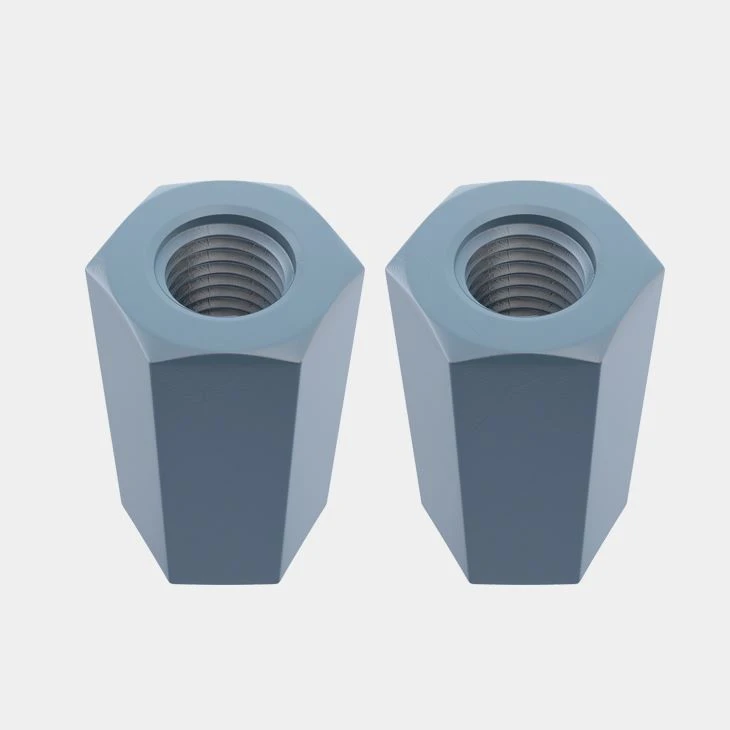
- Set Up the Test: Use a torque wrench to tighten the hex nut onto a bolt. Apply the recommended tightening torque for the specific nut and bolt combination. If the nut doesn't tighten smoothly or if it requires an unusually high or low amount of torque, it could indicate a problem with the thread integrity. For example, if you're using Long Hex Nut, the tightening torque needs to be carefully monitored to ensure a proper fit.
Ultrasonic Testing
For more in - depth inspection, especially for high - quality or critical applications, ultrasonic testing can be used.
- How It Works: Ultrasonic testing uses high - frequency sound waves to detect internal flaws in the threads. A transducer is placed on the nut, and the sound waves are sent through it. If there are any hidden cracks or defects in the threads, the sound waves will reflect differently, and this can be detected by the testing equipment. However, this method requires specialized equipment and trained personnel.
Conclusion
Checking the thread integrity of hex nuts is a multi - step process that involves a combination of visual inspections, tool - based tests, and sometimes advanced techniques like ultrasonic testing. By following these steps, you can ensure that the hex nuts you supply or use are of the highest quality.
If you're in the market for high - quality hex nuts or have any questions about thread integrity, don't hesitate to reach out. We're here to help you find the perfect hex nuts for your needs and ensure they meet the highest standards of quality. Whether you need Hexagon Shaped Nut, Thin Hex Nuts, or Long Hex Nut, we've got you covered. Let's start a conversation about your hex nut requirements and how we can work together to get the job done right.
References
- Machinery's Handbook, 31st Edition
- Fastener Standards and Specifications Manual