

How do I calculate the number of carriage bolts needed for a project?
Oct 27, 2025
Hey there! As a carriage bolts supplier, I often get asked, "How do I calculate the number of carriage bolts needed for a project?" Well, you've come to the right place. In this blog, I'll walk you through the process step by step.
Understanding the Basics of Carriage Bolts
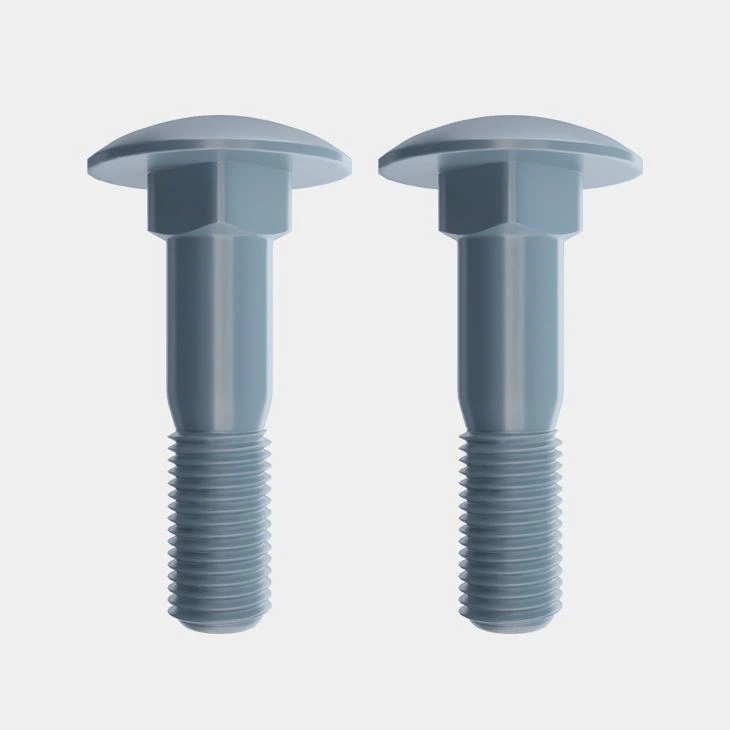
Before we jump into the calculations, let's quickly go over what carriage bolts are. Carriage bolts are unique fasteners with a round head and a square neck just below the head. The square neck prevents the bolt from turning when you're tightening the nut. They come in different types, like Square Neck Carriage Bolt, Round Head Bolt With Square Neck, and Partially Threaded Carriage Bolts.
Step 1: Determine the Project Type
The first thing you need to do is figure out what kind of project you're working on. Is it a deck, a fence, a wooden structure, or something else? Different projects have different requirements for carriage bolts.
For example, if you're building a deck, you'll need to consider the size of the deck boards and the joists. The spacing between the boards and joists will determine how many bolts you need. On the other hand, if you're building a fence, you'll need to think about the height of the fence, the number of panels, and the type of posts.
Step 2: Measure the Components
Once you know the project type, it's time to measure the components. You'll need to measure the length, width, and thickness of the materials you're using. For example, if you're building a deck, measure the length and width of the deck boards and the joists. If you're building a fence, measure the height and width of the fence panels and the posts.
Let's say you're building a deck that's 10 feet by 12 feet. The deck boards are 6 inches wide and the joists are 2 inches by 6 inches. You'll need to calculate the number of deck boards and joists first.
The number of deck boards can be calculated by dividing the width of the deck by the width of the deck board. In this case, 12 feet (or 144 inches) divided by 6 inches equals 24 deck boards.
The number of joists can be calculated by dividing the length of the deck by the spacing between the joists. Let's say the spacing between the joists is 16 inches. 10 feet (or 120 inches) divided by 16 inches equals 7.5 joists. Since you can't have half a joist, you'll need to round up to 8 joists.

Step 3: Determine the Bolt Spacing
The next step is to determine the bolt spacing. The bolt spacing is the distance between the bolts. It's important to follow the manufacturer's recommendations for bolt spacing to ensure the structural integrity of your project.
For a deck, the typical bolt spacing for deck boards to joists is 12 to 16 inches. For a fence, the bolt spacing for panels to posts is usually 16 to 24 inches.
Let's continue with our deck example. If the bolt spacing for deck boards to joists is 16 inches, you'll need to calculate how many bolts are needed for each deck board.
The length of each deck board is 10 feet (or 120 inches). Divide the length of the deck board by the bolt spacing. 120 inches divided by 16 inches equals 7.5 bolts. Since you can't have half a bolt, you'll need to round up to 8 bolts per deck board.
Step 4: Calculate the Total Number of Bolts
Now that you know the number of components and the bolt spacing, you can calculate the total number of bolts needed.
For our deck example, we have 24 deck boards and each deck board needs 8 bolts. So the total number of bolts needed for the deck boards to joists is 24 x 8 = 192 bolts.
You'll also need to consider the bolts needed for other parts of the project, like the joists to the ledger board or the posts to the footings. Let's say you need 4 bolts for each joist to the ledger board and there are 8 joists. That's 4 x 8 = 32 bolts.
Adding these together, the total number of carriage bolts needed for the entire deck project is 192 + 32 = 224 bolts.
Step 5: Account for Extra Bolts
It's always a good idea to account for extra bolts. You might make a mistake during installation, or you might need to replace a bolt later on. A good rule of thumb is to add 10% to 15% extra bolts to your total.
In our deck example, 15% of 224 bolts is 33.6 bolts. Rounding up, you'll need to add 34 extra bolts. So the final number of carriage bolts you should order is 224 + 34 = 258 bolts.
Step 6: Consider the Bolt Size
In addition to the number of bolts, you also need to consider the bolt size. The bolt size depends on the thickness of the materials you're using. For example, if you're using 2-inch thick boards, you'll need a longer bolt than if you're using 1-inch thick boards.
It's important to choose the right bolt size to ensure a secure connection. You can refer to the manufacturer's recommendations or consult with a professional if you're not sure.
Step 7: Check for Compatibility
Finally, make sure the carriage bolts you choose are compatible with the materials you're using. Some bolts are designed for use with wood, while others are suitable for metal or other materials.
If you're using different materials in your project, you might need to use different types of bolts. For example, if you're connecting a wooden deck to a metal post, you'll need a bolt that can handle both materials.
Conclusion
Calculating the number of carriage bolts needed for a project might seem complicated at first, but by following these steps, you can do it easily. Remember to determine the project type, measure the components, determine the bolt spacing, calculate the total number of bolts, account for extra bolts, consider the bolt size, and check for compatibility.
If you have any questions or need help with your carriage bolt needs, don't hesitate to reach out. We're here to assist you with all your carriage bolt requirements. Whether you're a DIY enthusiast or a professional contractor, we have the right bolts for your project. Contact us today to discuss your project and get a quote.
References
- Engineering textbooks on structural design
- Manufacturer's guidelines for carriage bolts
- Online resources on woodworking and construction projects